

September Rake Review 2026: When Bad News Stops Working
· Rake Review · Stormrake
- BTC
- ETH
- NEAR
- QNT
- ONDO
- HYPE
- PAXG

How a market reacts to bad news tells you more than the news itself. In a bear market, every headline is a reason to sell. In September, Bitcoin was handed a Middle East escalation, a failed crypto bill and the Fed's first rate hike in three years, and it finished the month green anyway.
The Bear Market Is Well And Truly Over
September threw three events at Bitcoin that, earlier this year, would each have been enough to send it lower. It absorbed all three.
A Middle East escalation. On 8 September, Houthi forces launched attacks on Saudi Arabia that wounded more than 70 people and set fires at oil facilities. The timing mattered, because the Houthis were targeting a shipping route Saudi Arabia had been relying on to move oil while the Strait of Hormuz was throttled by the US-Iran war. That was an energy shock on top of an energy shock, with crude already above $100.
A legislative failure. On 15 September, the Senate cloture vote on the CLARITY Act failed 49 to 50, 11 votes short of the 60 needed to even open debate. The bill the industry had spent two years betting on is effectively dead in the near term. Bitcoin fell nearly 4% on the result, from around $77,200 to roughly $75,600.
A rate hike. The next day, the Fed unanimously lifted the funds rate by 25 basis points to 3.75% to 4.00%, its first hike since 2023, and the median projection points to one more before year end. Bitcoin's response was close to nothing. It dipped to about $75,355, then settled near $75,800, largely flat over 24 hours.
Then it went higher. Late in the month, Bitcoin pushed above $87,000 for the first time in eight months.
Why The Reaction Matters More Than The News
Bear markets are defined less by the news than by how price responds to it. In a bear market, bad news is sold and good news is sold too. That was the first half of 2026, when Bitcoin lost 22.2% in Q1 and 14.09% in Q2.
September showed the opposite pattern. Geopolitical escalation, a regulatory setback and the first tightening in three years each produced a brief pause, not a reversal. When a market starts treating bad news as a breather rather than a reason to sell, the regime has changed.
The buyer behind it matters too. US spot Bitcoin ETFs took in around $2.4 billion in the week ending 25 September, helping reverse the heavy year-to-date outflows built up earlier in the summer. Institutions are buying through the headlines, not waiting for them to clear.
The Scorecard
- Month: green. Up roughly 6.5% in September, a month that has historically been one of Bitcoin's weakest.
- Quarter: green. Bitcoin gained roughly 42.5% in Q3, its second-best third quarter on record, behind only 2017's 80.41%. For context, the average Q3 return is about 8.6%, making this roughly five times a typical third quarter.
- Year: within reach. Bitcoin closed September around 5% below where it opened 2026. After a first half that saw back-to-back losing quarters, the year is now one solid month from turning positive.
Missing The Low Is Not The Same As Missing The Move
Those waiting for generational lows have likely missed them. The cycle low printed at $57,800 in July, and Bitcoin now trades around 45% above it.
That doesn't mean the opportunity has passed. The low is the point of maximum fear, and very few buy there. Historically, the larger share of a cycle's gains has come after the bottom, once the trend is established and before it is widely recognised.
But every move higher narrows the window a little further. The asymmetry is still there, but it shrinks each time the price rises.
The Excitement Is Back
We are not yet in a full expansionary bull market, but the mood has changed. Earlier this year, the Crypto Fear and Greed Index hit an all-time low of 5, the deepest fear in its recorded history. By late September it had moved into Greed, reading 74 on 28 September. Ethereum posted a 71% gain in Q3, its best third quarter on record. Whether you look at Bitcoin or altcoins, sentiment is up and tickers are green.
Narratives Are Flying
NEAR. NEAR was one of the standout performers of the month. The rally followed the launch of confidential perpetual futures on Hyperliquid and a record of over $1 billion in weekly volume on NEAR Intents. It gained 81% between 13 and 20 September alone. Then came the ETF angle, with Bitwise filing its final prospectus for a spot NEAR ETF, ticker NRR on NYSE Arca. Having traded below $2 earlier in August, NEAR pushed through $5 by 28 September.
QNT. Quant had arguably the most institutionally significant news of the month. The Clearing House, backed by 25 major US banks including JPMorgan and Bank of America, selected Quant to provide the technology for its tokenised deposit network. The token went from roughly $60 to over $370 within a week. The network itself isn't due to go live until the first half of 2027, so the market is pricing expectations well ahead of delivery.
ONDO. The tokenisation theme carried into Ondo, which had two partnership announcements in the space of a week. On 22 September, Ondo Stocks expanded through near.com and NEAR Intents, giving eligible NEAR users access to 20 tokenised US stocks. Two days later, Ondo launched tokenised portfolios built on BlackRock strategies. BlackRock's role is limited to supplying the models, but the market reacted anyway: ONDO rose about 25% in the 24 hours after the BlackRock launch and finished the week up 32%.
Have A Plan Before You Need One
These are exciting times, and it is easy to get distracted. For many of our readers, the goal is simple: accumulate as much Bitcoin as they can. A month of green altcoin tickers doesn't change that goal.
This isn't a call to rotate out of altcoins. Most of them are still deep in the red from their previous all-time highs, and if this is the early phase of a bull market, it would be reasonable to expect many to keep pushing higher, potentially to levels not seen since the last cycle.
The point is to decide in advance what you'll do if they get there. Some holders will rotate profits into Bitcoin. Some will realise those profits into fiat. Others will do nothing, and ride unrealised gains all the way back down. That last group rarely planned to. They simply never decided, and in altcoin markets indecision tends to be expensive. The time to set your plan is while prices are rising and your head is clear, not when a coin is at a new high and every instinct says it has further to run.
The Strange Psychology Of The Chase
There is something odd about how people approach altcoin narratives compared to Bitcoin.
With altcoins, people want in regardless of the price action. A token up 80% in a week attracts buyers because it is up 80% in a week. A token down 75% from its high attracts buyers because it looks cheap. Either way, they chase.
With Bitcoin, it is almost the opposite. Over the past few months, Bitcoin fell around 54% from its all-time high, then rallied more than 50% off that low. Yet that rally has made many people more hesitant to buy, not less. Many were contemplating buying when Bitcoin was lower, didn't, and are now waiting for prices that may not come again.
The same investor who will buy NEAR after an 80% week will hesitate on Bitcoin after a strong month. It is the asset with the deepest liquidity, the longest track record and record institutional demand, yet it is the one that gets second-guessed after a rally.
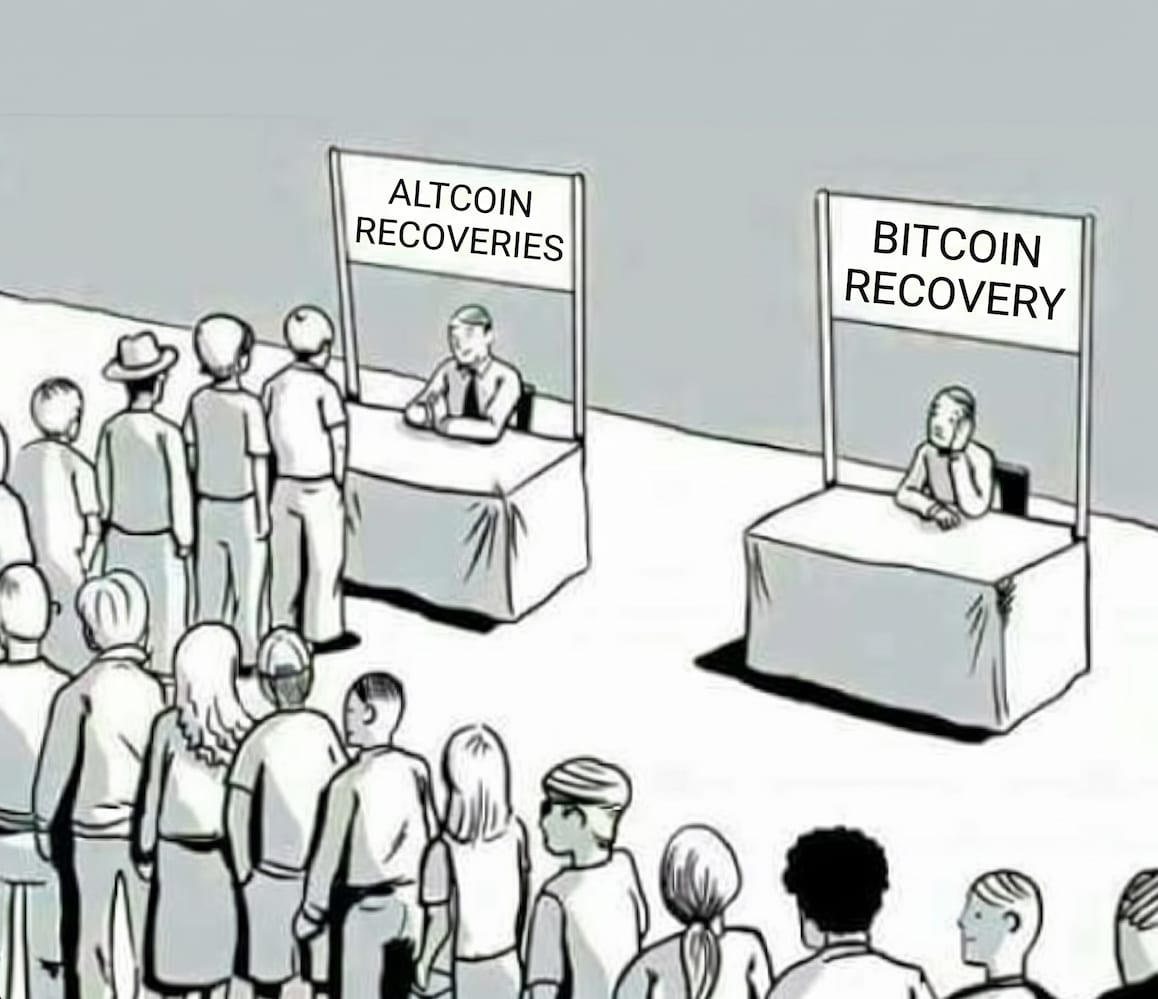
Are You Ready For Uptober?
September closed green, locking in the green quarter and extending Bitcoin's run to three consecutive green months: July up 7.2%, August up 25% and September up roughly 7%. The year isn't green yet, but the gap has narrowed to around 5%, from more than 26% at the end of July.
Why They Call It Uptober
For those who have had October circled on the calendar, it has arrived. Historically, October has been the most consistent month for Bitcoin, closing green in 10 of the last 15 years. April and July have each logged 11, but with one more year of data behind them.
That consistency is why the market has dubbed it "Uptober". The reputation is built on how often October is green, not on the size of the move. The average October return is 13.9%, which ranks fourth among the months.
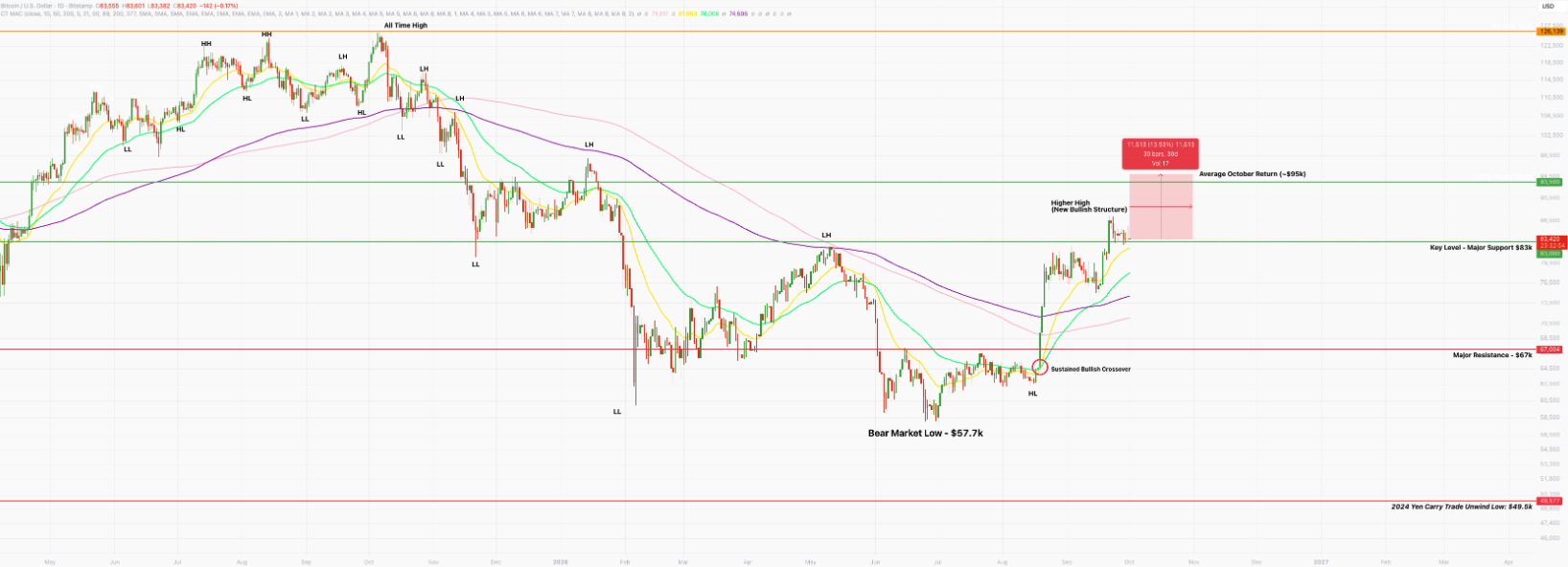
Source: https://www.tradingview.com/x/QFh77Tzd/
September was the month Bitcoin finally cracked $83,000. That level had been major resistance and the most recent lower high from early May. Breaking it, and holding it as support, gives Bitcoin a new higher high, the most bullish structure a market can print. The major hurdle of this recovery is now beneath price rather than above it.
If Bitcoin delivers an average October, that would put it in the mid $90,000s. There is little meaningful resistance between current levels and the low to mid $90,000s, and with structure and momentum on the side of the bulls, the path of least resistance looks higher rather than lower.
The level to watch is $83,000. As long as it holds as support, the structure remains intact. A return below it would suggest the breakout needs more time, not that the trend has reversed, but it would put a deeper correction back on the table before any push into the $90,000s.
In the news:
BlackRock Says The Machines Will Pay In Crypto.
The world's largest asset manager released a paper arguing that AI could be one of the biggest drivers of digital asset adoption, as autonomous agents start buying services, moving money and sourcing computing power on their own. BlackRock expects stablecoins to handle most everyday payments, but the Bitcoin angle is the interesting one. It cites research in which AI models generally chose stablecoins for spending and Bitcoin for long-term savings. When the firm running the largest Bitcoin ETF suggests machines may treat Bitcoin as their store of value, that is worth paying attention to.
Yields Are At Multi-Decade Highs.
The bond market selloff deepened through September. The US 10-year yield closed near 5.26%, its highest since 2007, while the 30-year rose above 5.61%, a level last seen in 2002. Higher yields are a genuine headwind for Bitcoin, but that makes September's price action more telling. Bitcoin posted a green month while long-dated yields hit their highest levels in more than two decades.
More Rate Hikes Could Be Coming.
After September's hike, the question is whether the Fed goes again at its 27 to 28 October meeting. Odds of an October hike sat near 70% early last week, before New York Fed President John Williams said there was "no need for urgency" and cooler inflation data followed. They have since fallen to around 35%, with more weight now on December. For Bitcoin, the lesson from September is that a well-telegraphed hike is not the threat. A surprise is.
Market Update:
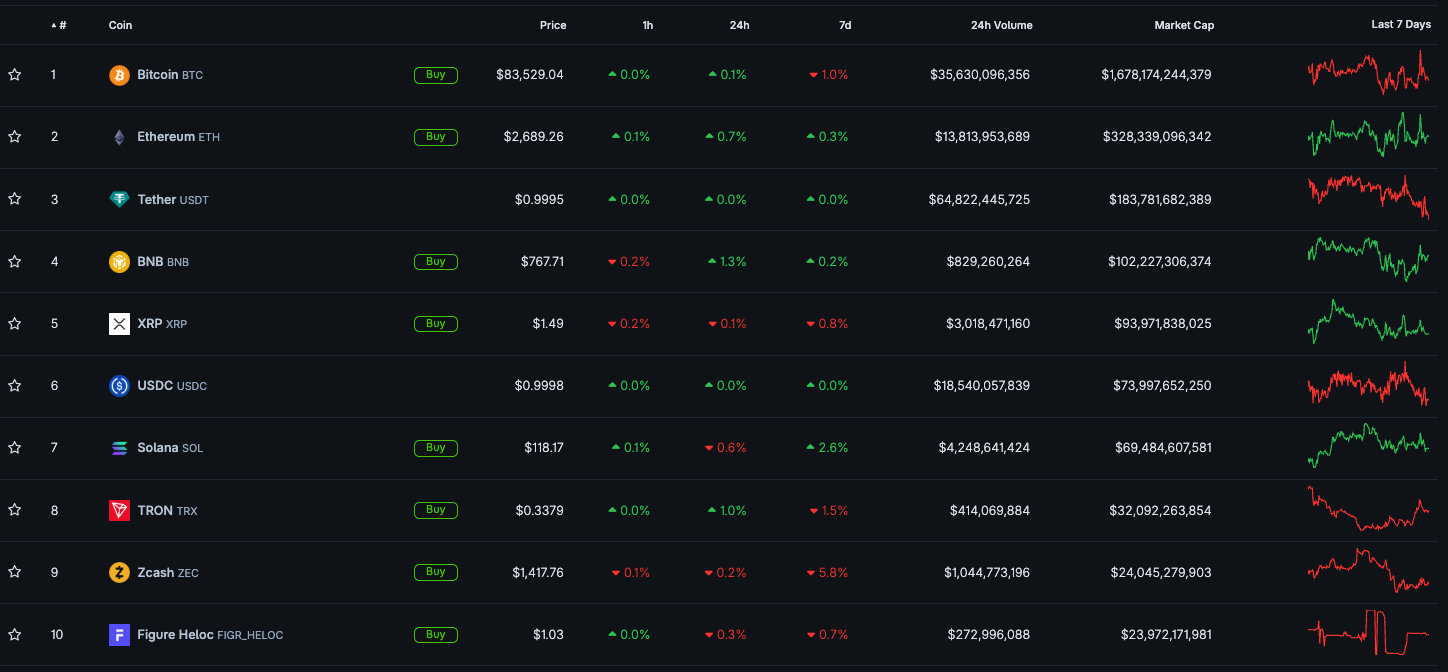
Here is the fast five of what you need to know about the market in September 2026:
- Bitcoin increased by 6.5% in September
- Ethereum increased by 8.8% in September
- Hyperliquid fell out of the top 10 despite increasing by 8% in September
- PAXG fell by 6.4% in September
- The total crypto market cap increased by 8.3% in September.
Video of the Month:
"If I Were 18 Again, I’d Build This Before Buying Assets" - Mark Di Paola
Education: What Is Robinhood Chain?

In July, Robinhood launched its own blockchain (yes the Robinhood), and within three months it has become one of the most active networks in crypto. Here is what it is, why it has taken off, and what to be aware of.
What Is It?
Robinhood Chain is an Ethereum Layer 2 (L2) built on the Arbitrum Orbit stack. Security comes from Ethereum, fees are paid in ETH, and Robinhood operates the chain itself.
Think of a layer 2 as an express lane built on top of a main road. Transactions are processed off Ethereum, where it is faster and cheaper, then bundled and posted back to Ethereum for final settlement. Robinhood Chain is fast even by L2 standards, with block times of 100 milliseconds.
There is no Robinhood token. Because fees are paid in ETH, the chain doesn't need one, and none has been issued or airdropped. Any token marketed as "the Robinhood token" is not affiliated with Robinhood.
Why Build Its Own Chain?
Robinhood describes the chain as purpose-built for real-world assets. In plain terms, it wants to move traditional investing onchain. Eligible users in more than 120 countries can now trade Stock Tokens 24/7 with full self-custody. A traditional stock trades during market hours and sits with a broker. A Stock Token can trade at 3am on a Sunday and sit in a wallet the user controls.
Robinhood joins Coinbase, Stripe, Circle and Tether in building its own rails rather than renting someone else's.
Why Has It Gained So Much Traction?
Total value locked sat under $5 million before mainnet and crossed $1 billion for the first time on 24 September. In its first two months, the chain processed $34.6 billion in DEX volume and 576 million transactions. Three weeks after launch, it overtook Coinbase's Base on daily active users.
Analysts at StoneX point to four drivers: Robinhood's brand, its permissionless design, subsidised gas fees, and a growing flywheel between memecoins and tokenised stocks. The brand effect was clearest with the CASHCAT memecoin, which went viral after CEO Vlad Tenev followed its account. Free transactions for the first 90 days removed the cost of experimenting, and open access meant anyone could build or launch a token without Robinhood's approval.
The Honest Picture
Much of the activity isn't what the chain was built for. More than half of onchain transactions are tied to memecoin issuance and trading, and tokenised real-world assets fell from about a third of TVL in early July to 6% by mid-August.
Robinhood's own customers haven't arrived yet either. CoinDesk Research estimates Robinhood app users account for only 1% to 2% of chain transactions. And with the free gas promotion ending on 29 September, the real test is whether activity holds once users pay their own fees.
Permissionless also cuts both ways. One investigator has linked a single group to 53 token launches, tracing $18.43 million in extracted funds. The Robinhood name on the chain is not a stamp of approval on the tokens launched on it.
Partnerships
Robinhood launched with established partners, which is a large part of why the chain could support real activity from day one. Uniswap deployed a dedicated AMM as the chain's primary liquidity venue. Chainlink is the official oracle, powering Stock Tokens including NVDA, GOOG and AAPL. Alchemy and BitGo provide infrastructure and custody, and Robinhood Earn runs on Morpho, with exploit losses covered by insurance through Lloyd's of London.
What This Means For Crypto Adoption
Strip away the memecoin noise and the bigger story remains. One of the largest retail brokerages in the world has put stocks on a blockchain, made them tradeable around the clock, and handed custody back to the user, all settled on Ethereum. If Robinhood's own customers start moving onchain, today's activity could look like the warm-up act.
Written by Alexandar Artis
Disclaimer
This information is general in nature and does not take into account your personal objectives, financial situation, or needs. Before acting, you should consider whether this information is appropriate for your circumstances and seek independent advice if necessary.
Digital assets are volatile and carry significant risk. Past performance is not indicative of future results. You may lose some or all of your investment.