

The Black Monday That Never Came
· Market Update · Stormrake
- BTC
- ZEC

Thirty-nine years ago yesterday, the Dow Jones fell 22.6% in a single session. It is still the worst day in the index’s history. Here in Australia, thanks to the time difference, we met it as Black Tuesday, and the local market lost roughly a quarter of its value.
This weekend, the internet decided it was about to happen again.
A Weekend of Panic
The anniversary fell on a Monday for the first time in years, and social media did the rest. “Black Monday” trended across X and Crypto Twitter. The case for a crash was long and, on paper, convincing:
-
Oil above $100 a barrel, with Brent reportedly closing Friday near $110
-
The VIX at a four-month high
-
Bond yields rising and inflation running hot
-
A Fed that hiked rates only last month
It also came after a bruising week. The S&P 500 fell nearly 2% and the Nasdaq 4.5%, their biggest weekly drops since late June. Semiconductors had it worst. The Philadelphia Semiconductor Index fell about 15.7% over eight straight sessions, as investors started asking how the AI build-out will be paid for. CoreWeave became the face of that fear, falling more than 25% on concerns over its $50 billion debt load.
Crypto felt it first, because crypto never closes. Over the weekend, tokenised AI and chip stock contracts sold off hard, liquidating around $51.6 million in leveraged positions. Bitcoin slipped with them and briefly tested the $80,750 to $81,000 zone.
By Sunday night, plenty of people were sure what Monday would bring.
What Actually Happened
Nothing of the sort.
The Nasdaq rose 1.11% to close at 26,430. The S&P 500 gained 0.41%. The Dow was flat. The chip sector that led the selloff led the rebound, and the semiconductor index snapped its eight-day losing streak.
There is a lesson here that applies well beyond this one Monday. When crash predictions are trending, it usually means a lot of selling has already happened. By the time fear is loud enough to trend, many of the sellers are already out.
Why Bitcoin’s Resilience Matters
The more interesting story for us is what Bitcoin did through all of this.
While chip stocks lost more than 15% in eight sessions, Bitcoin held its ground. It bounced off support, reclaimed $81,500 on rising volume and tagged $83,000 overnight before easing back to around $82,500.
The level that stands out is $81,500, roughly the average cost basis of US spot Bitcoin ETF buyers. Bitcoin is sitting right on it. Holding here means the average ETF holder is back around breakeven, which tends to take pressure off.
Just as telling is what we did not see. Funding rates stayed close to neutral through the weekend. There was no crowded leveraged trade waiting to be unwound. A risk-off shock hit a market that was not overextended, and the market absorbed it.
That does not make Bitcoin immune to a broader selloff. It is not. But a market that holds support while the most crowded trade in equities falls apart is showing more strength than the headlines suggest. It fits the view we set out in our Q4 Outlook: the recovery is building while sentiment remains poor.
BlackRock Builds a Seatbelt
Fittingly, the same weekend people were bracing for a crash, BlackRock filed for a product built for exactly that fear. The iShares Bitcoin Managed Protection ETF (PBIT) will hold IBIT and use options to cushion losses, in exchange for capping some of the upside.
It is BlackRock’s third Bitcoin ETF filing, and the target buyer is clear: the cautious allocator who wants Bitcoin exposure without the drawdowns. That is a large pool of capital. Fees and cap levels have not been disclosed yet, so we will revisit it once they are.
The Bottom Line
The crash everyone was waiting for did not arrive. Fear peaked on Sunday night, and buyers stepped in on Monday. Bitcoin held its key levels through a genuine equity scare, and the world’s largest asset manager is building products to bring cautious money in.
None of that removes the risks. Oil is still above $100, the AI funding question is unresolved, and the Fed decision on 28 October is the next real test. But a market that shrugs off a well-publicised crash call is giving us useful information.
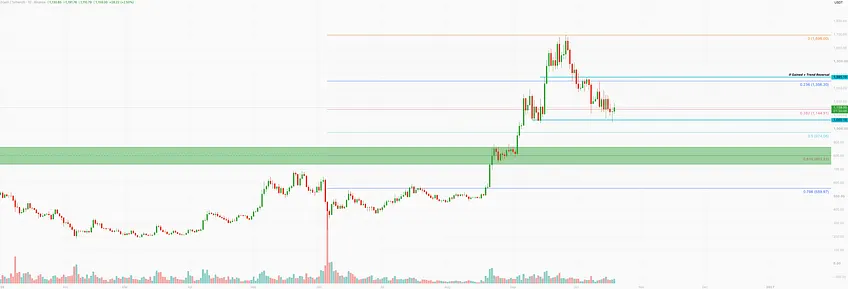
Stormrake Spotlight: Zcash (ZEC) ($1,159)
Source: https://www.tradingview.com/x/BAujYhmP/
ZEC has recovered over 7% since yesterday’s Morning Note, bouncing cleanly from the support we identified. As we noted yesterday, holding this support opens the door for a retest of the $1,385 resistance.
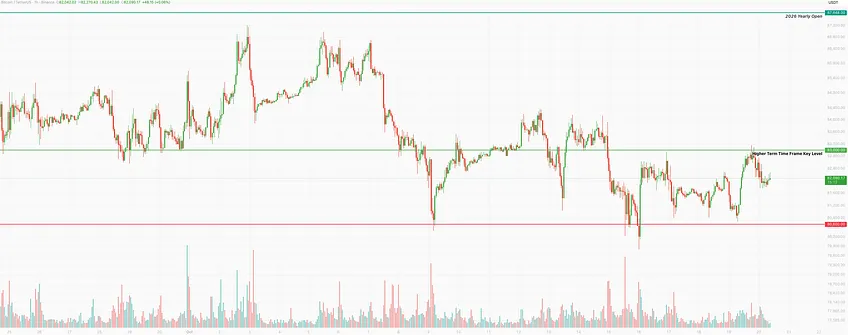
BTC/USD Key Levels and Price Action:
Source: https://www.tradingview.com/x/4PPs0OJB/
Bitcoin remains stuck in a consolidation range between $80.6k support and the key $83k resistance. As covered above, the average cost basis of US spot ETF buyers also sits inside this range, at around $81.5k. Holding above $80k is highly constructive. We have now ticked over a month of consolidation since the sustained breakout above $80k, and the market is building a base rather than giving back its gains. A daily close above $83k would be the signal that this range is resolving higher.
*All prices are denominated in USD unless stated otherwise*
Written by Alexandar Artis
Disclaimer
This information is general in nature and does not take into account your personal objectives, financial situation, or needs. Before acting, you should consider whether this information is appropriate for your circumstances and seek independent advice if necessary.
Digital assets are volatile and carry significant risk. Past performance is not indicative of future results. You may lose some or all of your investment.