To receive the Morning Note in your inbox, subscribe here: https://stormrake.substack.com/

BIP-110, formally called the Reduced Data Temporary Softfork, is a proposed change to Bitcoin’s rules that would temporarily limit how much non-financial data can be stuffed into a transaction. It targets things like images, text, or other files directly onto Bitcoin’s blockchain rather than using it purely for payments. Supporters say this data clutters the network, raises costs for people running nodes, and pulls Bitcoin away from its core purpose as sound, permissionless money. Critics say restricting what counts as a valid transaction sets a dangerous precedent, and that Bitcoin has no business deciding whose transactions matter more than others as long as the fee is paid.
What’s Actually Going On
Picture Bitcoin’s blockchain as a big shared filing cabinet where every drawer costs money to use. Most people use it to store simple, important paperwork, who owns what money. A smaller group has started using the same drawers to store photos, artwork, and other large files, because nothing in the rules stops them. BIP-110 is a proposal to put a temporary size limit on what can go in those drawers, so the cabinet stays focused on the paperwork it was built for.
The tricky part is who gets to decide. Bitcoin has no CEO and no head office. Changes only happen if enough of the people running the network, mainly miners, agree to switch the rules at the same time. Almost none of them did. A smaller group of committed supporters went ahead and enforced the new rule anyway, simply by refusing to accept blocks that didn’t follow it. That disagreement is what actually played out over the past two days.
What Happened This Weekend
Almost nobody backed this change. Heading into the weekend, only about 2.5% of miners were on board, nowhere near the 55% needed to make it official. None of the big mining companies wanted a bar of it.
On Saturday, the disagreement turned real. Two groups mined a block at the exact same spot in the chain, one following the old rules, one following the new BIP-110 rules. Bitcoin’s main network went with the old rules and kept moving. The small group backing BIP-110 broke off onto their own separate version.
Since then, it hasn’t been close. The main Bitcoin network has powered ahead, now more than two dozen blocks in front. The BIP-110 side, with only a tiny sliver of miners behind it, has barely moved. In plain terms, Bitcoin carried on as normal, and a small breakaway group is now sitting off to the side on their own, largely ignored version.
Where This Leaves Things
BIP-110 did not fail in the shadows. It failed publicly, in the most direct way possible, by attempting to force a rule change without the broad agreement Bitcoin has always required for this kind of change, and watching the vast majority of the network simply continue on without it. The proposal isn’t necessarily gone for good, its supporters may well try again, but this specific attempt has already played out, and the result is about as clear as these things get. Bitcoin’s main chain, secured by the overwhelming majority of the network’s mining power, never missed a beat.
What This Means for Stormrake Clients
None of this affected client holdings with Stormrake, and none of it required any action on our part.
Custody comes down to who controls the keys, and that never changed. What matters in a situation like this is simple: which version of Bitcoin does everyone, exchanges, businesses, other holders, actually agree is the real one. That was always the main chain, the one that kept working normally the whole way through. Stormrake watched this closely as it played out so clients didn’t have to think about it.
This is, in a smaller way, the same argument covered in earlier notes on Bitcoin’s protocol reliability. Governance disputes like this happen at the edges of Bitcoin, among developers, miners, and node operators arguing about optional rule changes. They do not touch the core ledger itself, which kept settling transactions exactly as it has every day since 2009, without pause, while this entire disagreement played out around it.
Reach out to your dedicated Stormrake broker today if you would like to discuss protocol governance, network security, or review your general digital asset holdings.
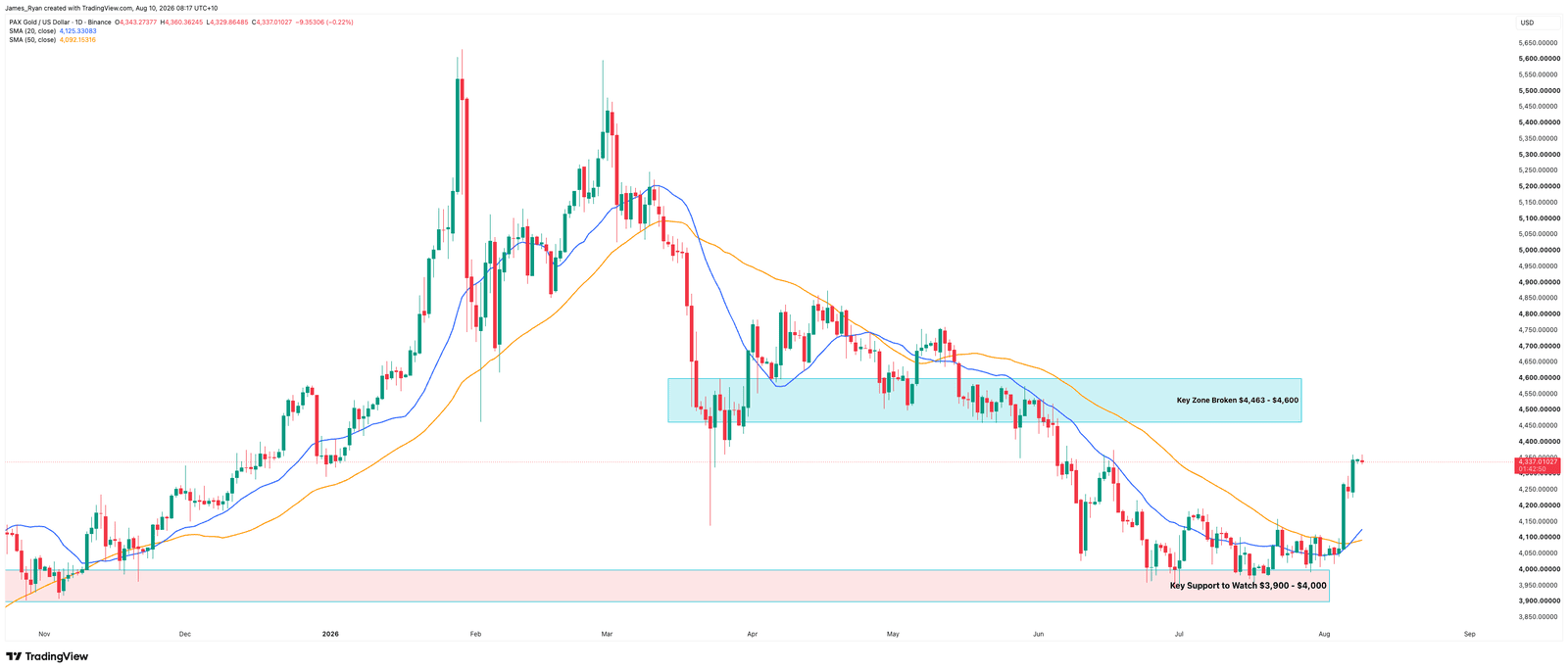
Stormrake Spotlight: Pax Gold (PAXG) ($4,337)
Stormrake Spotlight: Pax Gold (PAXG) ($4,337)