To receive the Morning Note in your inbox, subscribe here: https://stormrake.substack.com/
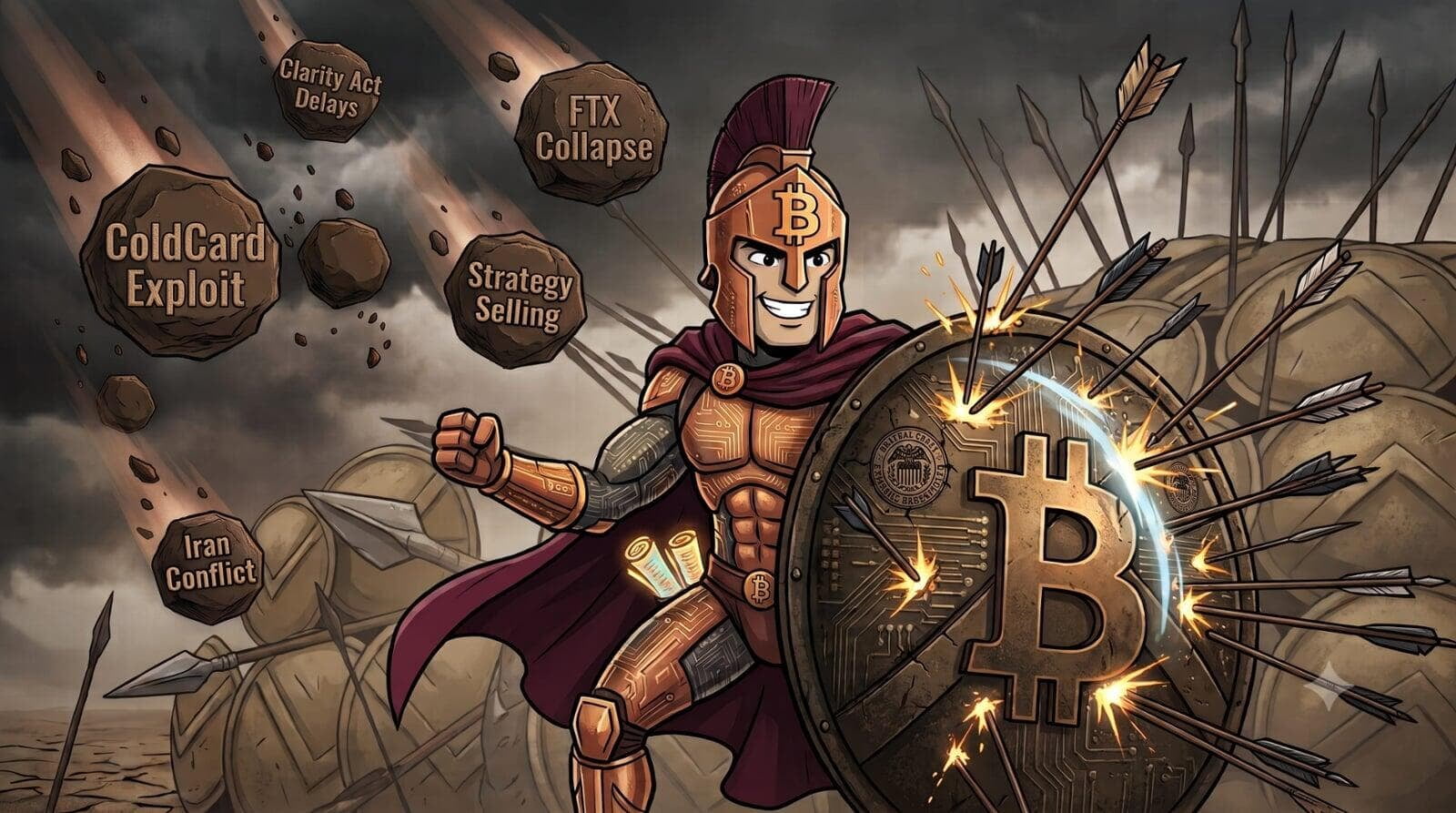
An established principle across financial markets holds that bull markets peak when positive catalysts fail to push valuations higher, while bear markets conclude when negative headlines no longer drive prices down. Observing this dynamic unfold in real time provides an invaluable gauge for market sentiment, especially when a severe headline tests the market’s structural integrity.
That exact scenario unfolded recently. Between late July and early August 2026, a five-year-old firmware vulnerability in Coldcard hardware wallets was exploited to drain roughly $100 million in Bitcoin across more than 5,000 addresses. This event represented a severe headline for self-custody proponents, as a silent, undetectable defect compromised holdings that owners believed were entirely secure. Under the market dynamics of the 2022 bear market, an exploit of this magnitude would have triggered widespread panic and aggressive liquidations. Instead, Bitcoin absorbed the headline and maintained a structure of printing higher lows in price.
The Structural Parallel to FTX
A compelling historical parallel exists in the collapse of FTX in November 2022. The downfall of that $32 billion exchange stands as one of the most damaging events in digital asset history, occurring near the trough of the previous cycle bear market. Looking back after Bitcoin subsequently reached fresh record highs, the collapse of FTX appears as the failure of a specific human institution rather than a structural failure of Bitcoin.
During the 2022 crisis, the Bitcoin protocol operated flawlessly, validating transactions and enforcing programmatic scarcity without interruption. The failure resided entirely within a centralised corporate entity misusing customer deposits outside the rules of the blockchain. The market panic reflected a temporary loss of confidence in human intermediaries rather than the underlying monetary asset.
Distinguishing Third-Party Failures from Protocol Integrity
Analysing the Coldcard exploit through the same lens reveals an identical pattern. Bitcoin’s consensus mechanism, blockchain ledger, and 21 million coin supply cap functioned precisely as designed. The vulnerability existed within device firmware code introduced in March 2021 that compromised random number generation. This was a manufacturer code defect rather than a flaw in Bitcoin’s cryptography.
Every major loss event across digital asset history, including Mt. Gox, BitGrail, FTX, and Coldcard, represents a failure of centralised human infrastructure built around the network. Bitcoin’s open ledger remains completely uncompromised, with zero double-spends or falsified balances since the genesis block in 2009. Blaming the base protocol for a hardware vendor’s firmware bug resembles blaming physical gold for a faulty lock on a bank vault.
Hindsight is Twenty - Twenty
Looking back at any prior bear market bottom from the comfort of a subsequent bull run, the price trajectory appears clean and almost inevitable. Retrospectively, market participants easily declare that the bottom was in, panic was overdone, and accumulation was the obvious choice. That clarity exists entirely because the ending of the story is already known.
During November 2022, the collapse of FTX did not feel like a discounted buying opportunity disguised as a short-term crisis. It felt like an existential event with no immediate guarantee that market structure would not deteriorate further. Acting with conviction in the middle of genuine fear and headlines predicting systemic failure remains extraordinarily difficult.
If executing during maximum fear were simple, every market participant would capture generational returns, eliminating the premium rewarded for taking that risk. Investors who accumulated through the depths of the 2022 panic without knowing the future outcome captured the full scale of the subsequent recovery. That financial reward reflected compensation for tolerating severe psychological discomfort rather than possessing superior market information.
The Coldcard exploit represents this cycle’s live test of that exact principle. Nobody enjoys the luxury of knowing the eventual outcome in real time. Bitcoin ultimately awards each investor the exact entry price their conviction and risk tolerance earned. Selling into fear yields a price that reflects hesitation. Accumulating through severe headlines yields an entry that reflects long-term discipline. Experiencing the discomfort of uncertainty remains an inescapable prerequisite for capturing macro market rewards.
Desk Take and Strategic Execution
When severe negative headlines fail to break market price structure, it signals that sell-side exhaustion has reached an advanced stage. Coldcard’s firmware defect represented a serious operational failure for hardware self-custody, yet Bitcoin’s order books demonstrated remarkable resilience.
To navigate market volatility and mitigate single-point-of-failure risks across digital asset holdings, connect with your dedicated Stormrake broker today to discuss our institutional-grade custody solution and disciplined spot execution frameworks.
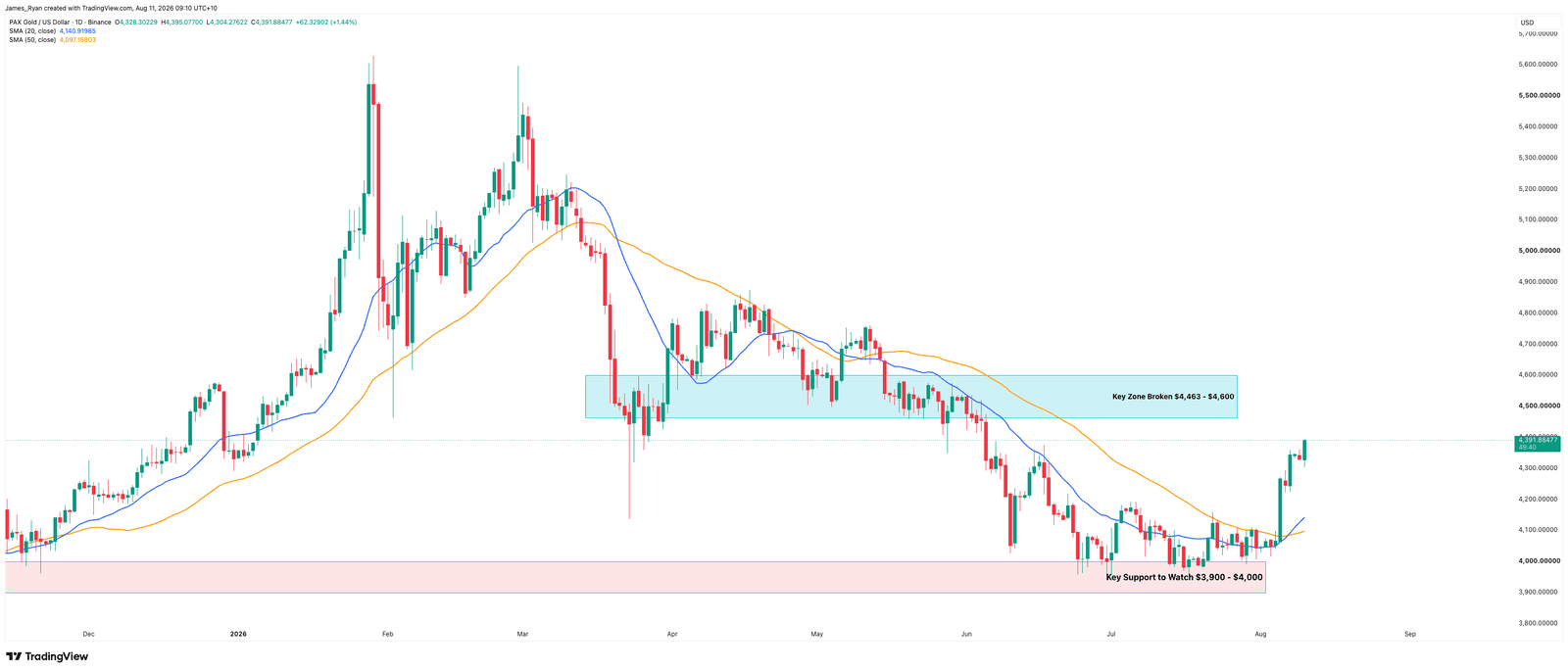
Stormrake Spotlight: Pax Gold (PAXG) ($4,391)
Stormrake Spotlight: Pax Gold (PAXG) ($4,391)