To receive the Morning Note in your inbox, subscribe here: https://stormrake.substack.com/
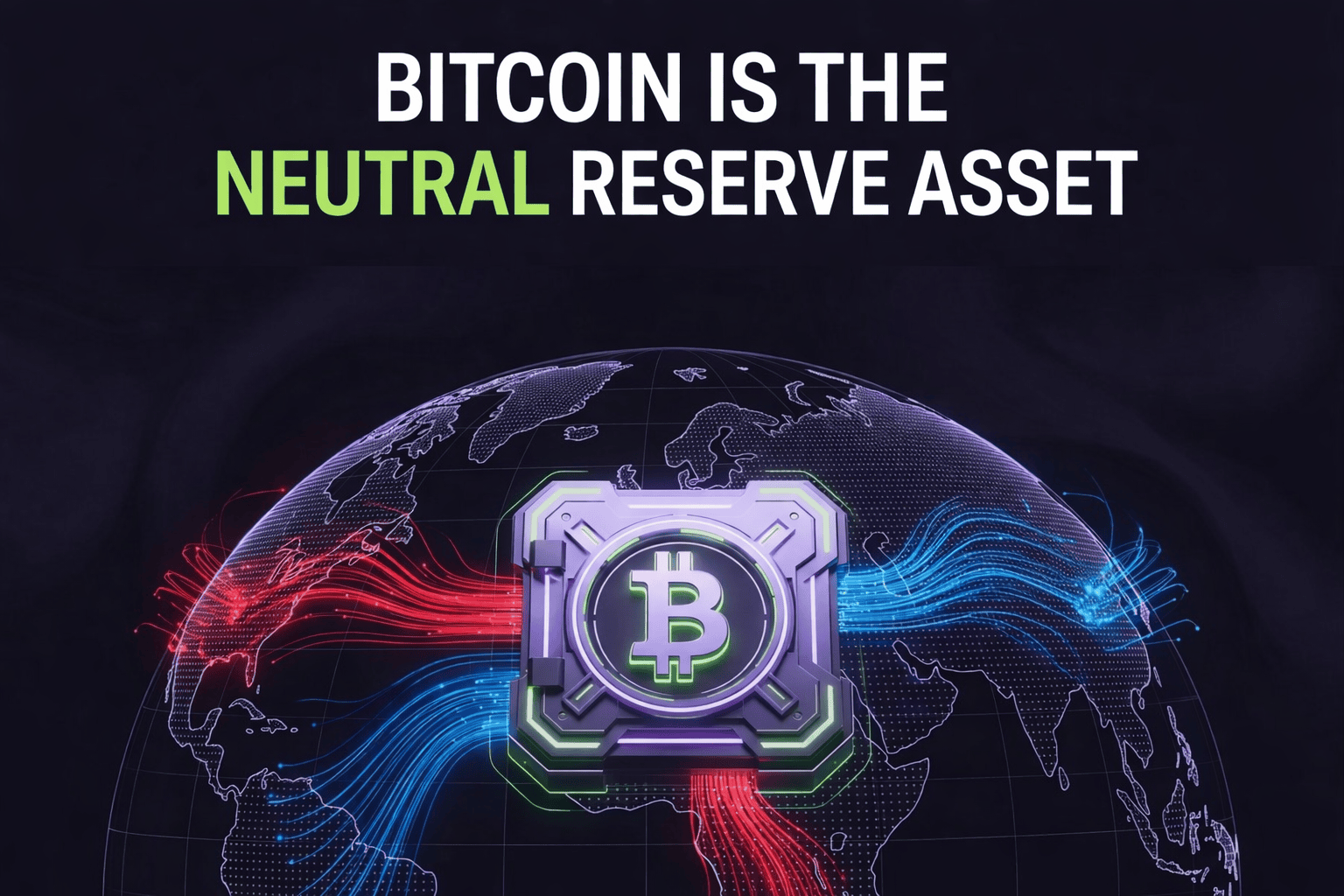
Bitcoin’s position as a politically neutral reserve asset is no longer a forward-looking narrative. It is being actively validated by institutions, embedded into sovereign strategy, and tested in real-world conditions.
At the institutional level, the framing has become increasingly explicit. BlackRock has defined Bitcoin as a “geopolitically neutral” asset, pointing to its lack of counterparty risk and independence from any single monetary system. Fidelity reinforces this by emphasising that Bitcoin’s scarcity is not just perceived but mathematically enforced, removing reliance on trust, storage infrastructure, or political coordination.
This shift in language reflects a deeper evolution in how Bitcoin is understood. It is no longer being assessed purely through a risk lens, but as a structural hedge against monetary debasement and geopolitical instability.
Capital flows support this transition. US spot Bitcoin ETFs now hold over $100 billion in assets as of early 2026. This scale introduces the kind of liquidity and accessibility expected of reserve-grade assets, strengthening Bitcoin’s credibility within institutional portfolios.
At the sovereign level, the neutrality thesis becomes even more tangible.
The United States has formally established a Strategic Bitcoin Reserve, signalling that Bitcoin is now viewed as a strategic asset alongside traditional national reserves. In parallel, the Czech National Bank has initiated a Bitcoin test allocation, aiming to build practical experience with an asset that exists outside both euro and dollar systems. These early steps, while measured, reflect a broader shift in how central banks are thinking about diversification and resilience.
Bitcoin’s neutrality has also been demonstrated under pressure. Between 2022 and 2025, it saw increased use in cross-border transactions within sanctioned environments. The protocol does not recognise political boundaries or restrictions. It executes based on code, offering a level of financial continuity that traditional systems cannot always guarantee.
While Bitcoin’s base layer acts as the neutral “vault,” the Lightning Network has become its “diplomatic pouch” a way to move value instantly and privately across borders. With over $1 billion in monthly volume and a 266% growth rate in 2025, Lightning is no longer just for small transfers. It is evolving into a high-speed, censorship-resistant alternative to the ageing and politically leveraged SWIFT network.
This growth is not just theoretical. Lightning capacity reached 5,606 BTC in late 2025, while transaction reliability across major routing nodes now exceeds 99%. The network is also moving upmarket, with average transaction sizes rising and early institutional transfers, including million-dollar settlements, proving that neutral rails can support meaningful capital flows without intermediary approval.
Because Bitcoin’s monetary policy is governed by code rather than committee, it stands apart as a global reserve asset that cannot be weaponised through the denial of SWIFT access or the freezing of central bank offshore accounts.
As the global financial system continues to fragment, the importance of neutrality is moving from theoretical to essential. Bitcoin is not emerging because it is perfect, but because it is predictable, borderless, and independent. In a world where trust is increasingly conditional, assets that operate outside of political influence are no longer optional. They are strategic.
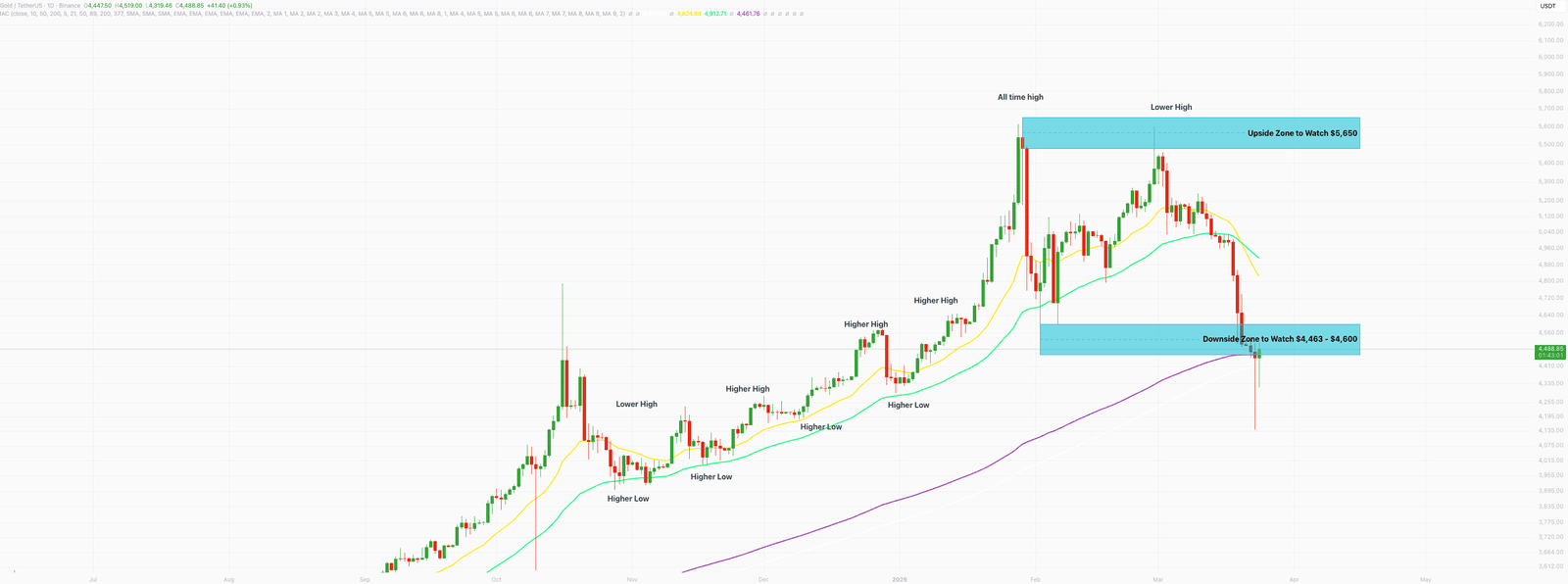
Stormrake Spotlight: Pax Gold (PAXG) ($4,490)
Stormrake Spotlight: Pax Gold (PAXG) ($4,490)