To receive the Morning Note in your inbox, subscribe here: https://stormrake.substack.com/
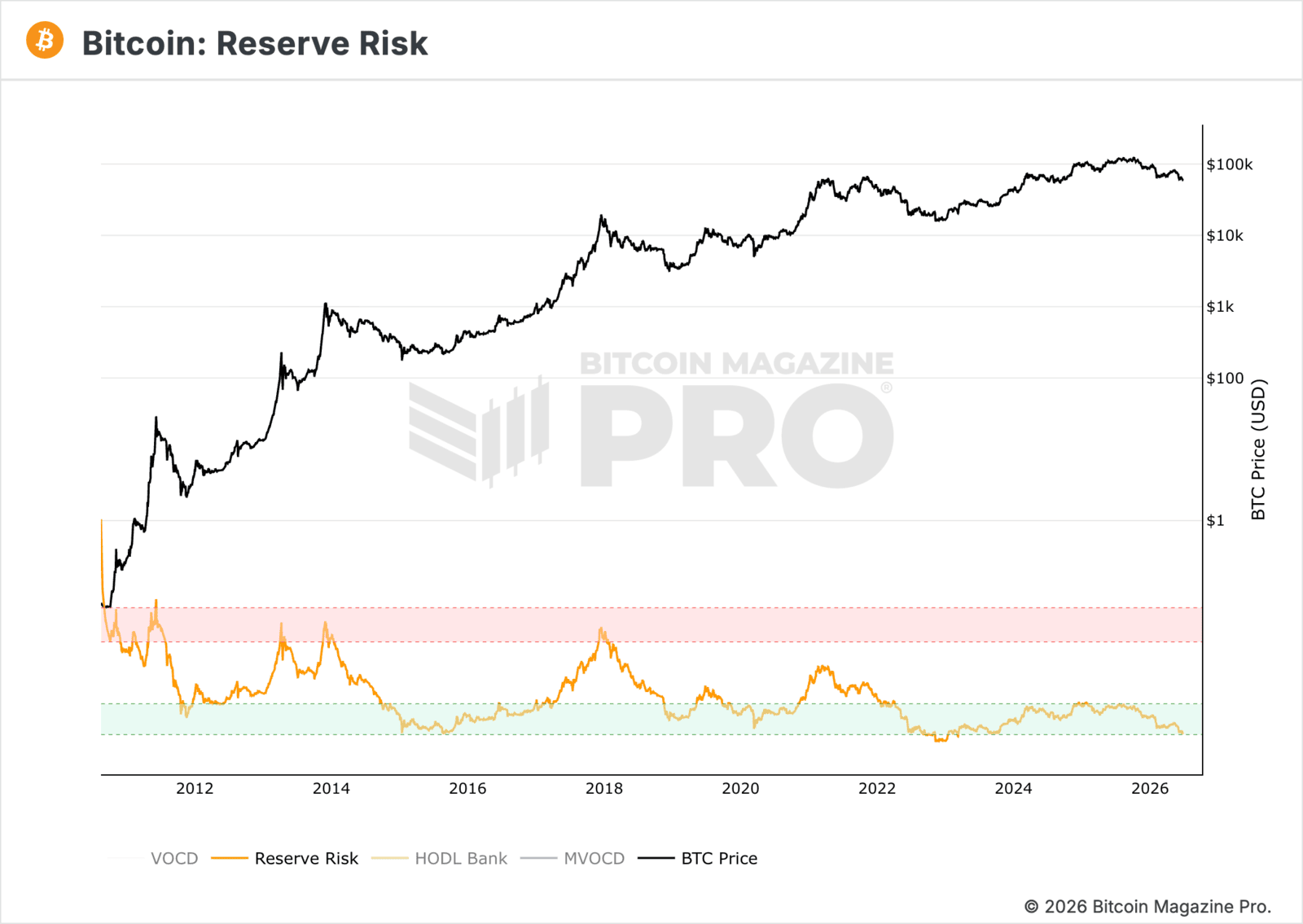
Reserve Risk is the metric that ties this series together. Where the previous three looked at valuation, sentiment and miner behaviour, Reserve Risk looks at the people who matter most in a bear market: the long-term holders who have chosen not to sell.
The concept behind it is straightforward. When Bitcoin’s price is high and long-term holders are still refusing to sell, the opportunity cost of holding is significant. That confidence relative to price creates high Reserve Risk, and historically that has corresponded to cycle tops. When price is low and long-term holders continue to hold through the pain, that same confidence exists but at a fraction of the price. The risk of entering the market at that point is low relative to the potential reward. That is low Reserve Risk, and it is where the most asymmetric returns in Bitcoin’s history have been captured.
Reading the chart is simple. When Reserve Risk enters the upper red band, the risk of holding or buying is historically high and the market has tended to be near a major top. When it drops to the bottom of the lower green band, the inverse is true: long-term holders are accumulating under stress, and the market has historically been near a major bottom.