To receive the Morning Note in your inbox, subscribe here: https://stormrake.substack.com/
The latest move in the Fed’s balance sheet tells a story that is hard to ignore.
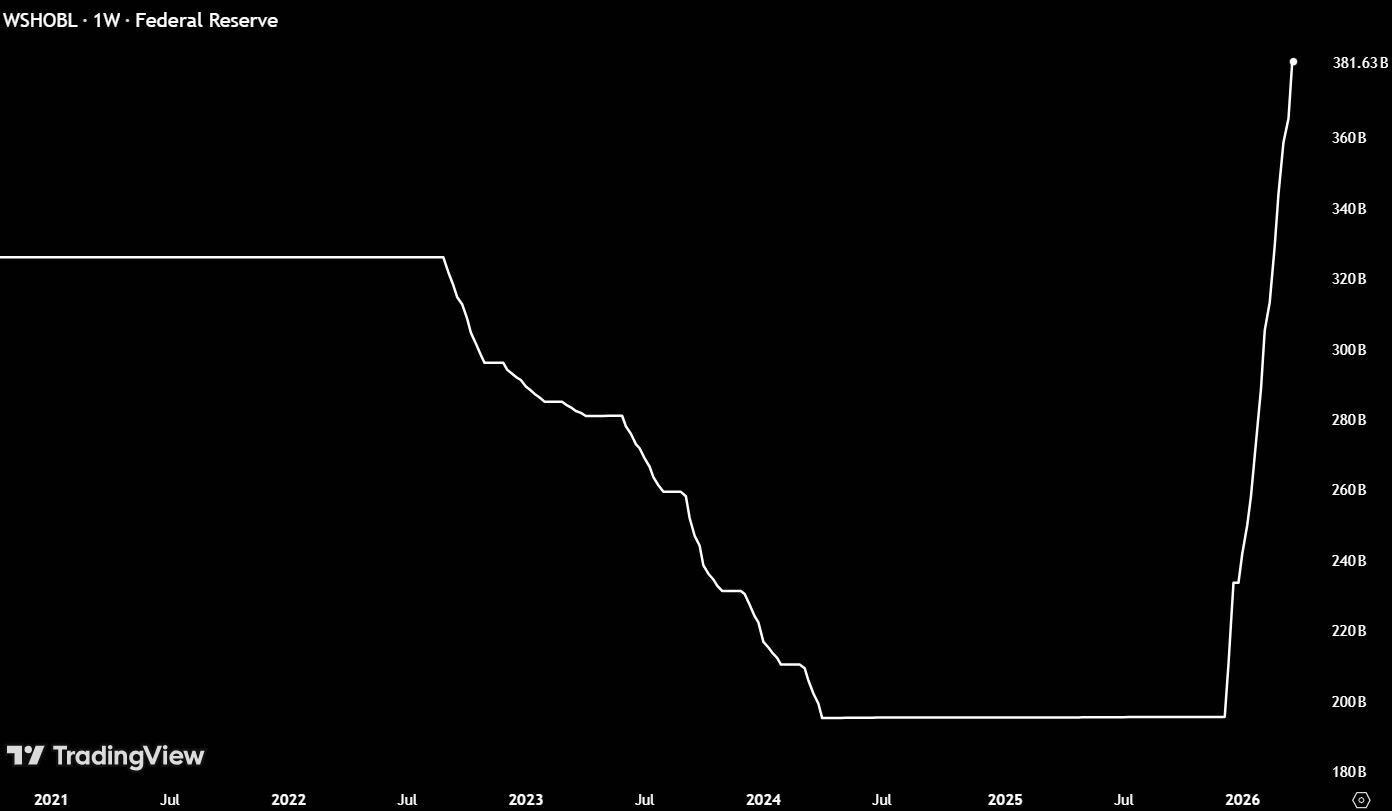
After nearly two years of controlled contraction, liquidity is no longer being drained quietly. It is being injected aggressively. Right now, the market is being forced to confront a shift that sits at the heart of every cycle: inflation versus solvency.
The great tightening just broke
From 2022 through early 2026, the Federal Reserve maintained a clear path. Quantitative Tightening was in full effect, reducing liquidity, tightening financial conditions, and forcing risk assets to reprice. This was the cost of fighting inflation.
But the latest spike in Treasury holdings changes that narrative entirely.
This is not a gradual slowdown in QT. This is a sharp reversal.
Moves like this do not happen unless something breaks. Whether it is stress in funding markets, pressure in the banking system, or cracks in sovereign debt demand, the Fed has stepped in with size. This kind of vertical expansion signals urgency, not optional policy adjustment.
M2 is turning with it
This is where the bigger picture comes into focus.
For most of the tightening cycle, M2 money supply was contracting or flat. That environment is historically hostile for risk assets, as less money in the system means less capital flowing into equities and crypto.
Now, with balance sheet expansion returning, M2 is likely to follow.
Liquidity does not stay contained. It feeds through the system, lifting bank reserves, easing lending conditions, and allowing capital to move again.
And the relationship here is not subtle. Historically, the 1-year rolling correlation between Bitcoin and M2 has reached as high as 0.94, close to a lockstep move.
Crypto does not respond to narratives. It responds to liquidity.
Inflation vs solvency
This is the real pivot.
QT was designed to bring inflation back under control. It worked to an extent, but at a cost. Financial conditions tightened to the point where something appears to have forced the Fed’s hand.
Now the trade-off is clear. Do you continue tightening and risk systemic stress, or inject liquidity and risk reflation?
Right now, the Fed looks to be choosing stability.
That does not mean inflation is solved. It means it is being deprioritised. Historically, these moments mark a transition. Not immediately inflationary, but structurally supportive for asset prices.
Liquidity is the signal
We have already seen early signs of smart money positioning back into crypto, and that positioning now has a macro tailwind.
When liquidity expands, market behaviour changes. Downside becomes more supported, dips get bought faster, and higher beta assets begin to outperform.
Bitcoin typically leads in the early phase. Altcoins follow once confidence expands.
If M2 trends higher alongside this balance sheet expansion, the conditions for a broader market move strengthen significantly.
The Market Knows What This Is
This could be a temporary facility. It could be a targeted backstop.
But markets do not wait for labels.
They respond to direction. And right now, that direction has shifted.
Liquidity is returning. And capital rarely stays on the sidelines when it does.
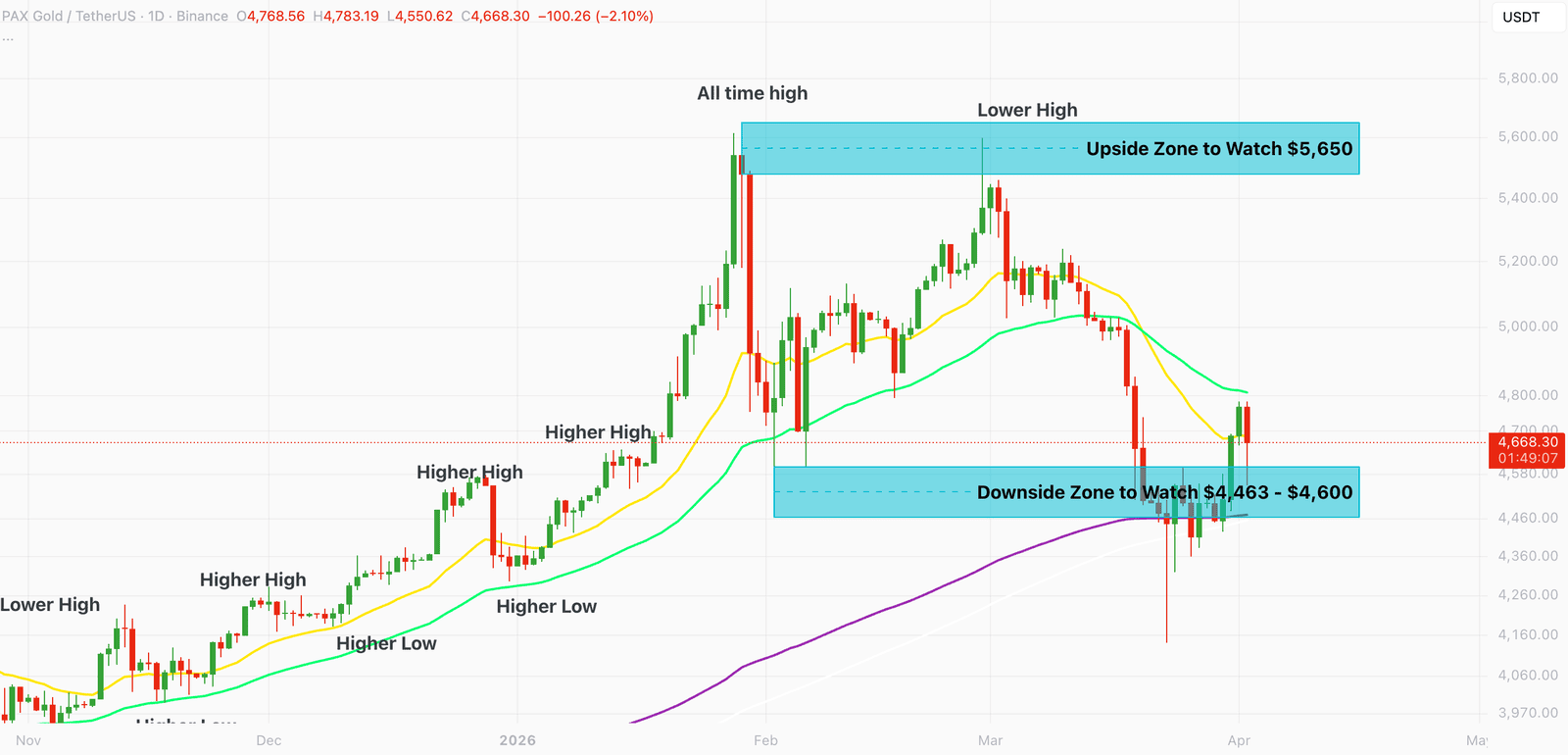
Stormrake Spotlight: Pax Gold (PAXG) ($4,668)
Stormrake Spotlight: Pax Gold (PAXG) ($4,668)