To receive the Morning Note in your inbox, subscribe here: https://stormrake.substack.com/
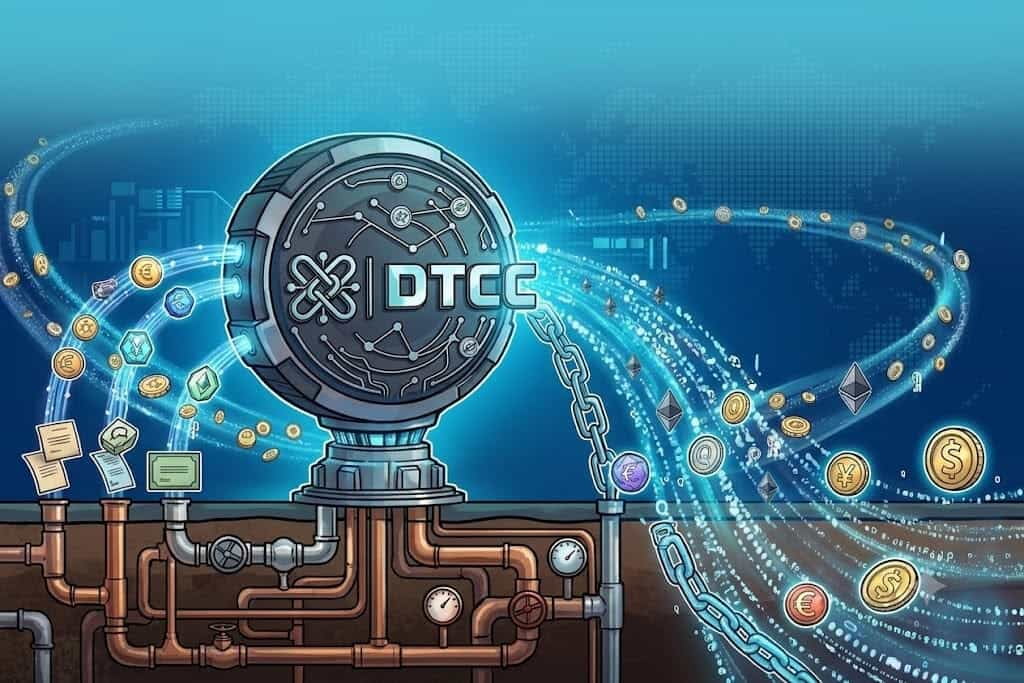
On July 15, 2026, the Depository Trust & Clearing Corporation (DTCC), the core clearinghouse responsible for clearing and settling the overwhelming majority of US securities trades worth roughly $4.7 quadrillion annually, ran live production trades using tokenised versions of real-world assets held in custody. This operational deployment extended far beyond a sandbox pilot or a press release regarding future development. Participating institutions transacted with actual US Treasuries, equities, and ETF shares converted into on-chain tokens across live delivery-versus-payment workflows.
More than 30 major financial institutions participated directly, including BlackRock, Goldman Sachs, JPMorgan, State Street, Vanguard, CME Group, Nasdaq, Citadel Securities, Société Générale, and the NYSE. The deepest plumbing layer of traditional finance is now actively adopting the core architecture Bitcoin introduced seventeen years ago: assets settling on a shared, programmable ledger rather than through fragmented back-office intermediaries and batch processing.
Real-World Operational Workflows
The live production trades covered a broad suite of institutional use cases, including collateral pledges, securities lending, US Treasury and repo delivery-versus-payment trades, equity token transfers, and central counterparty margin workflows. In a notable operational execution, JPMorgan converted holdings of the Invesco QQQ Trust ETF into tokenised form to satisfy live margin requirements with CME Group. Concurrently, shares of the SPDR S&P 500 ETF Trust, one of the largest ETFs globally, were tokenised and transacted within the same settlement sequence.
The technical architecture utilised two distinct environments: DTCC’s private Hyperledger Besu network and the public Canton Network. Built specifically for regulated financial entities, the Canton Network allows institutional participants to transact while maintaining strict privacy safeguards. DTCC leadership emphasised that major institutions require multi-chain flexibility tailored to specific privacy, resilience, and interoperability requirements, preferring an infrastructure-first strategy over a monolithic blockchain model. This milestone directly follows regulatory groundwork laid late last year, when the Depository Trust Company received a No-Action Letter from the SEC authorising a tokenisation service for custodied assets. A full commercial launch of the DTCC Tokenization Service is scheduled for October 2026.
Infrastructure Validation and the Bitcoin Thesis
Maintaining analytical precision requires separating infrastructure validation from direct spot market acquisition. DTCC deployed no assets onto the Bitcoin network, and this event operates independently of institutions acquiring spot BTC. Hyperledger Besu remains a permissioned network controlled by DTCC, while Canton Network functions under institutional privacy protocols, standing in contrast to Bitcoin’s fully open, permissionless, and adversarial trust model.
What this event actually validates is something profound for the broader digital asset ecosystem. The foundational concept pioneered by Bitcoin, namely assets settling transparently on a shared ledger without reliance on traditional multi-day settlement chains, has now passed production testing at maximum institutional scale. For years, a primary institutional objection to blockchain-based settlement was that the technology remained unproven at the scale and rigor required by capital markets. That specific objection is now measurably weaker. DTCC CEO Frank La Salla confirmed that the firm successfully applied traditional institutional rigor to tokenised assets without compromising systemic integrity or operational resilience.
Once the overarching category of blockchain settlement is de-risked at the highest institutional tier, remaining counter-arguments against specific digital assets pivot from technological feasibility to design choices. As traditional capital markets integrate tokenised infrastructure, the unique attributes of Bitcoin as an unencumbered, non-sovereign monetary asset become increasingly prominent.
The Future of Finance
This development represents a fundamental evolution in global financial infrastructure. Rather than a speculative price trigger, the DTCC tokenisation deployment marks the adoption of shared ledger settlement by the backbone of traditional capital markets. As legacy financial plumbing transitions onto programmable ledgers, the technological baseline for all digital assets shifts permanently. Cut through the market noise and consult your dedicated Stormrake broker today to discuss strategic spot execution frameworks as traditional finance migrates on-chain.
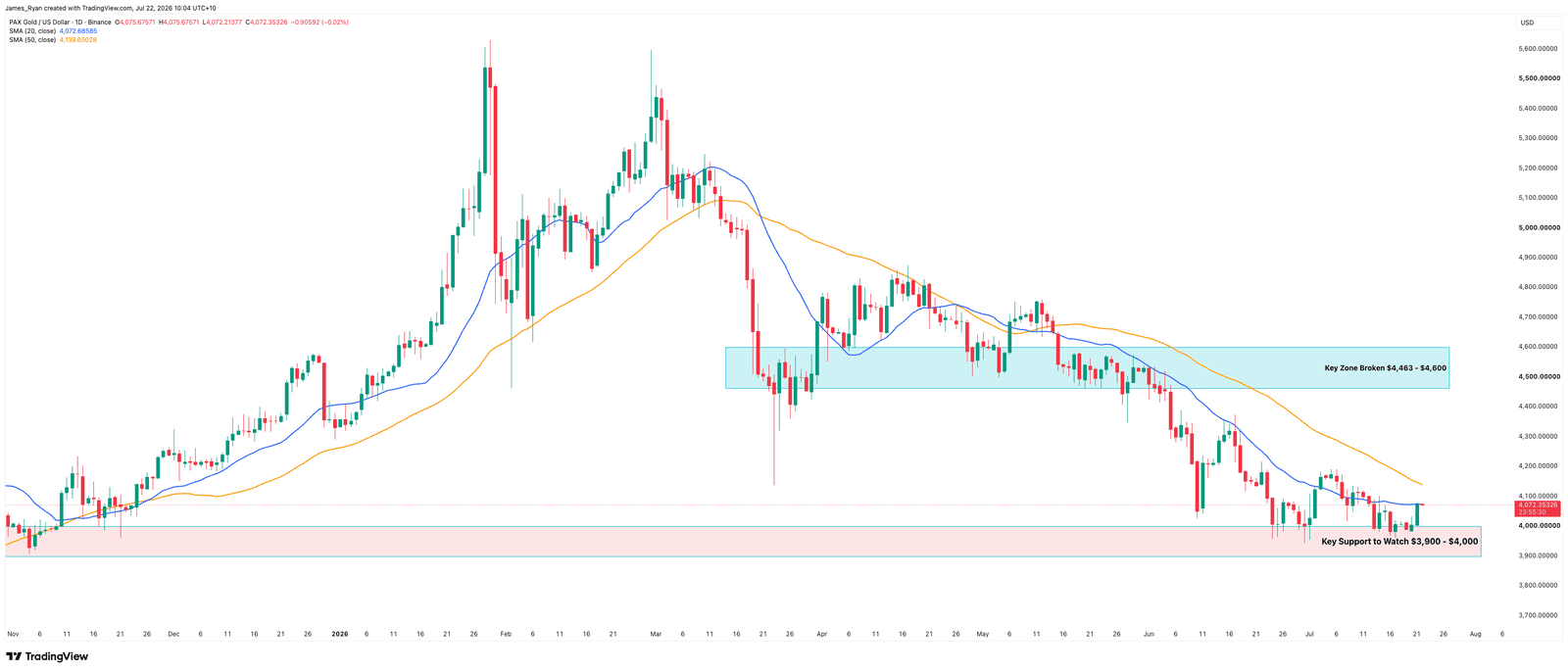
Stormrake Spotlight: Pax Gold (PAXG) ($4,072)
Stormrake Spotlight: Pax Gold (PAXG) ($4,072)