To receive the Morning Note in your inbox, subscribe here: https://stormrake.substack.com/

The public listing of Space Exploration Technologies Corp (NASDAQ: SPCX) has completely redefined the scale of global equity markets. Debuting on the open market at an initial public offering price of $135 per share, the aerospace giant closed its first session at $161.20 per share to command a historic valuation of $2.1 trillion, before surging to $192.50 per share overnight. This astronomical velocity has captured the undivided attention of the financial world, yet the underlying market structure demands a cautious evaluation.
The offering broke traditional underwriting conventions by allocating a massive 30% of the shares directly to retail participants via digital investment applications. This is roughly triple the typical 10% retail allocation observed in large institutional listings. Crucially, SpaceX only floated a tiny fraction of its total capitalisation, launching with a float of less than 5%. This means pre IPO insiders, venture backers, and legacy allocators retain over 95% of total share ownership, creating an environment where everyday buyers risk providing immediate exit liquidity for early investors looking to realise gains on historically illiquid paper.
The AI Payload
This public milestone follows extensive corporate reorganisation earlier this year. SpaceX absorbed Musk’s artificial intelligence venture, xAI, in a blockbuster all stock transaction valued at $250 billion. Now operating as a primary division alongside the data pipeline of X, this integration has heavily reshaped the financial profile of the aerospace giant, introducing a net loss of any accounting adjustments despite generating a healthy adjusted EBITDA of $6.58 billion.
Traditional market performance metrics show that public tech market debuts carry significant near term risk, with historical data tracking that over 60% of growth listings lose value and drop below their initial offer price within the first three months of open trading. Low float structures are particularly susceptible to sudden momentum reversals once early demand cools. Bypassing this equity volatility highlights the clear value of unencumbered spot property over paper proxies.
How Bitcoin Reaches Escape Velocity
Despite the immediate volatility facing equity buyers, the broader lines for digital assets remain exceptionally bright. Musk has firmly established a treasury model that prioritises macroeconomic debasement protection across his enterprises. Specifically, SpaceX holds Bitcoin on its balance sheet (reported ~18,712 Bitcoin, worth ~$1.2-1.45 Billion). With SpaceX now operating as one of the largest public entities on earth, a multi billion dollar allocation of Bitcoin is permanently woven into the macro equity framework.
This structural reality is fundamentally bullish for Bitcoin price action and long term price discovery. Every successful satellite launch and contract win effectively underwrites the permanency of this multi billion dollar corporate balance sheet allocation, massively reducing any forced selling pressure. As SpaceX expands its orbital dominance, its growing valuation forces traditional fund managers and legacy institutional allocators to benchmark against an enterprise backed by cryptographic hard money. This creates a powerful corporate template, driving a wave of institutional copycat demand where rival technology conglomerates must adopt similar treasury models to compete against the absolute capital efficiency of Musk’s corporate network.
Navigating these public equity markets reinforces the critical importance of keeping your capital cleanly positioned. Bypassing volatile equity proxy traps and securing spot assets directly remains the most effective path to preserve wealth. Reach out to your dedicated Stormrake broker today to chart your course through Bitcoin’s ultimate price discovery mission, securing pure spot allocations as we launch into completely uncharted financial territory.
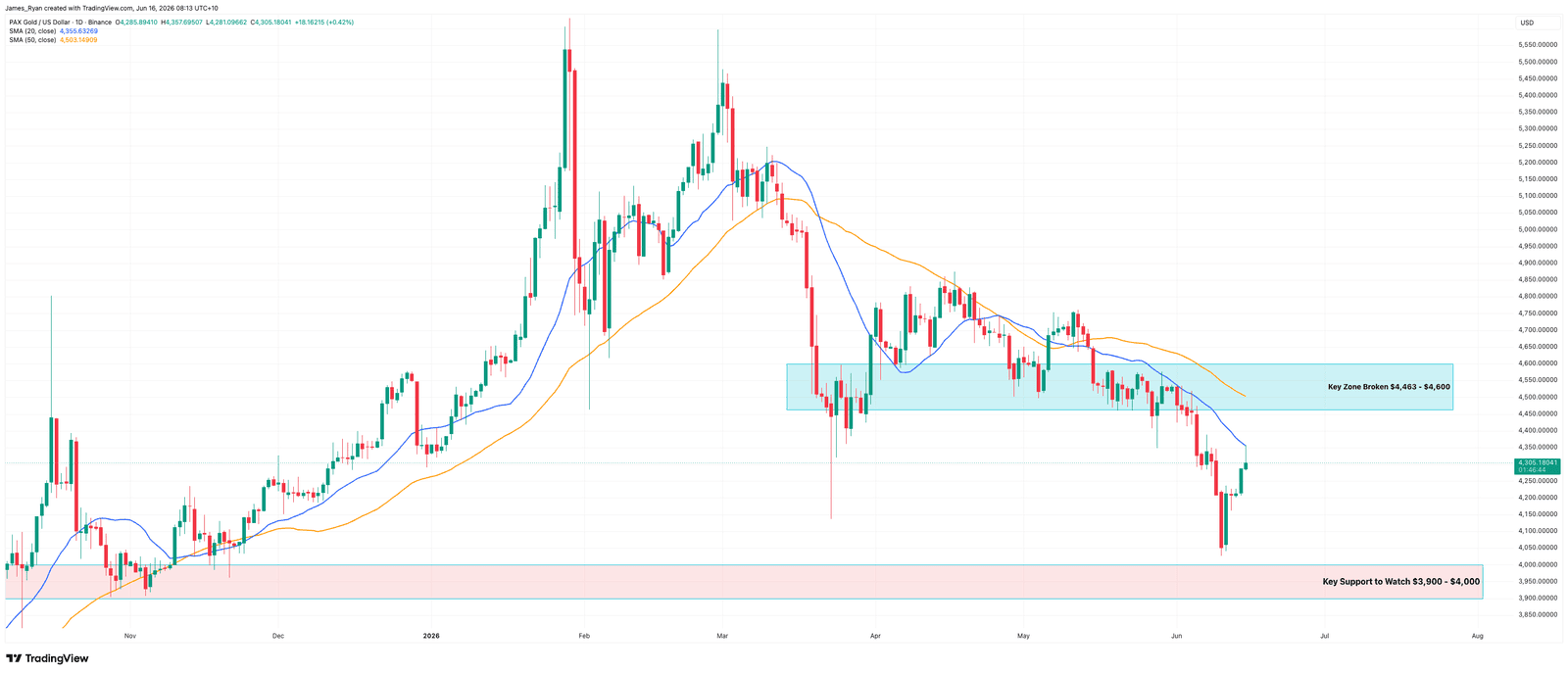
Stormrake Spotlight: Pax Gold (PAXG) ($4,300)
Stormrake Spotlight: Pax Gold (PAXG) ($4,300)