To receive the Morning Note in your inbox, subscribe here: https://stormrake.substack.com/
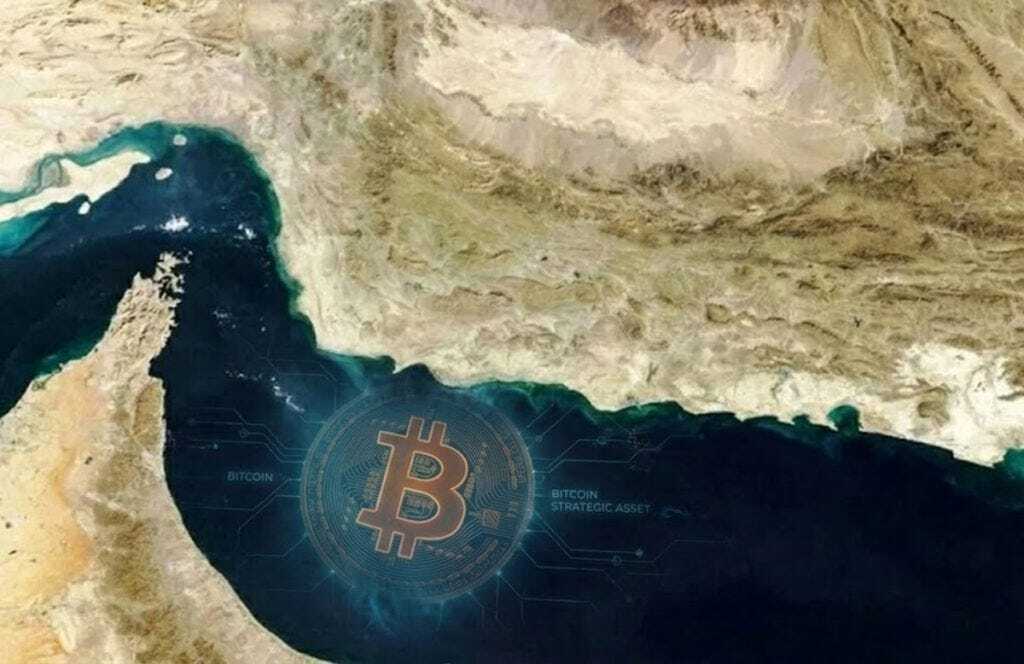
The Strait of Hormuz remains one of the most critical arteries in global trade, responsible for a significant share of the world’s oil flows. Today, it is no longer operating as a neutral passage. It is a controlled corridor shaped by conflict, cost, and increasingly, alternative financial rails.
Since the conflict escalated, Iran has effectively closed the strait. Reports indicate that vessels are being charged up to $2 million per voyage for safe passage. For operators, this is not optional. It is the price of transit through one of the world’s most important chokepoints.
What is changing is how that price is being paid.
The Tehran Toll Booth
A structured but unofficial system has emerged. Tankers are guided through designated routes, often referred to as the “Tehran Toll Booth” within shipping circles. Passage is negotiated in advance, with approvals tied to coordination and, in many cases, payment.
Crucially, this system has now moved beyond anecdotal reporting.
Intelligence sources confirmed that at least one tanker operator paid a multimillion-dollar fee in cryptocurrency and cash to establish what has effectively become a “first mover” benchmark for safe passage. This transaction was verified by maritime analysts and later reported by both the Financial Times and Bloomberg, cementing its credibility within global markets.
That moment matters.
It transforms the narrative from speculation into precedent. Once a benchmark is set in a market like this, it rarely remains isolated.
These payments are not flowing through traditional banking infrastructure. Sanctions have made that route increasingly unworkable. Instead, transactions are being settled through cryptocurrency, alongside cash and commodity exchanges.
This shift is not theoretical. It is active, functional, and scaling within a live global trade environment.
Why Bitcoin Matters Here
Under normal conditions, transactions of this size would rely on correspondent banks, SWIFT messaging, and multiple layers of compliance. In this environment, those systems become points of failure.
Bitcoin removes that friction.
It allows value to move without reliance on intermediaries, without exposure to immediate seizure, and without the delays tied to legacy financial rails. In a high-risk corridor where timing and certainty matter, this becomes a practical advantage rather than a philosophical one.
This is not adoption driven by narrative. It is driven by necessity.
Bitcoin, in this context, is not being treated as a volatile asset. It is being used as a settlement layer that works when others cannot.
Sanctions, Speed, and Control
Three forces are driving this behaviour.
Sanctions continue to restrict access to global financial systems, pushing participants toward alternative rails. Speed becomes critical in a conflict zone, where delays increase exposure and risk. At the same time, these transactions allow for tighter control over capital flows, creating closed loops that directly fund enforcement on the ground.
The result is a system that operates outside conventional oversight, yet remains highly effective in practice.
A Fragmented Shipping Landscape
For the shipping industry, this introduces a new layer of complexity. Access is no longer purely logistical. It is political, financial, and increasingly conditional.
Certain vessels, particularly those linked to neutral or regionally aligned nations, appear to move through the system with fewer barriers. Others face higher costs, delays, or outright restrictions.
Legally, the situation remains contested. International law supports free navigation through the strait, and several nations have pushed back against the imposition of these fees. Yet enforcement on the water tells a different story.
Ships still pass. Payments are still made.
Market Pressure Builds
The impact is already feeding through global markets. War-risk premiums have surged. Shipping costs have climbed. Energy prices are responding to the added friction at one of the world’s most important transit points.
Each layer of disruption compounds the next. But beneath the surface, something more structural is unfolding.
This is one of the clearest real-world cases of Bitcoin functioning as a parallel financial system under pressure. Not as a hedge, not as speculation, but as infrastructure.
When traditional systems become inaccessible, Bitcoin does not need to adapt. It simply continues to operate.
And in a world where access can be restricted, delayed, or denied, that reliability becomes something else entirely.
It becomes freedom.
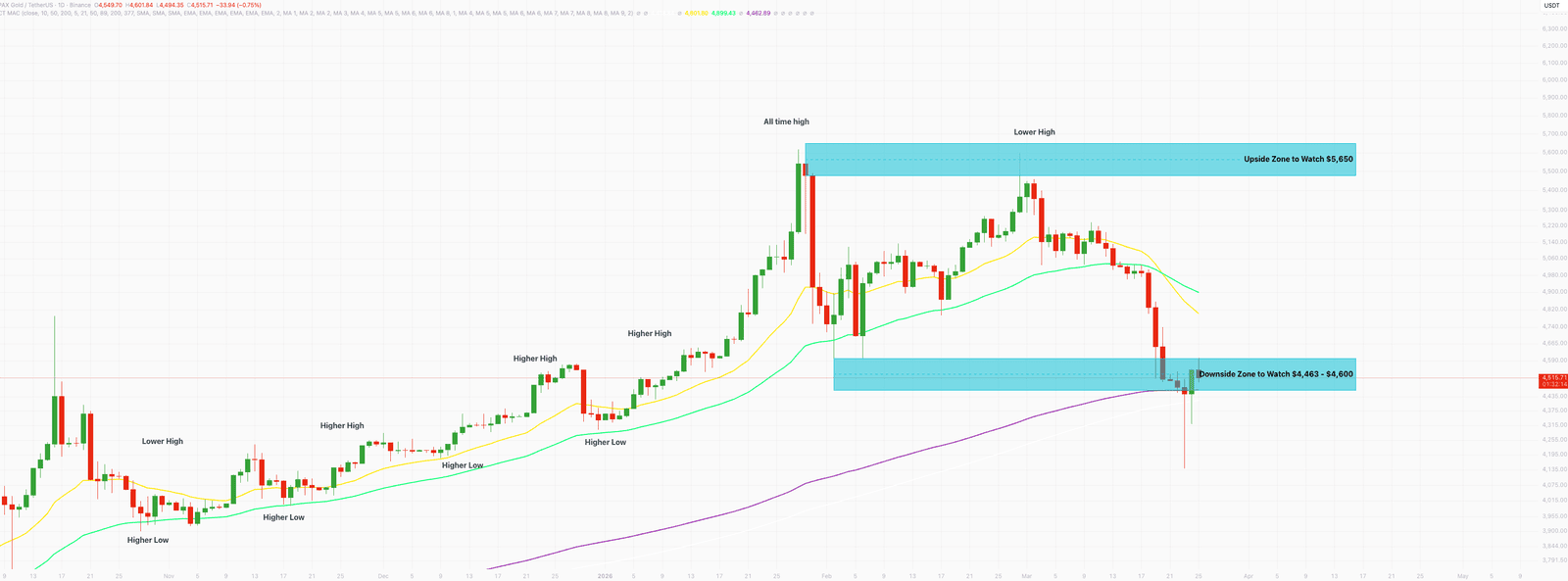
Stormrake Spotlight: Pax Gold (PAXG) ($4,515)
Stormrake Spotlight: Pax Gold (PAXG) ($4,515)