To receive the Morning Note in your inbox, subscribe here: https://stormrake.substack.com/
MARA Holdings, the world’s largest publicly traded Bitcoin miner, disclosed in its August 6 filing that it sold 23,093 BTC for approximately $1.63 billion across the first half of 2026, at an average price of $70,631. The sale reduced MARA’s Bitcoin holdings by 34%, from 53,822 coins at the end of 2025 down to 35,577 by June 30. The money went toward paying off debt and funding a move into AI and data centre infrastructure, including a $1.5 billion deal and a $600 million Texas project. MARA also dropped its old policy of never selling Bitcoin, in favour of a more flexible approach.
Worth noting, this selling isn’t happening right now - it already happened, spread out gradually over five months with the biggest chunk sold back in March. The market has already absorbed it and moved on. MARA isn’t alone either, miners across the industry sold more Bitcoin in the first three months of 2026 than they did across the whole of 2025. Several major mining companies have signed multi-billion dollar deals to host AI computing instead, showing this is an industry-wide shift, not just one company’s decision.
Evolving Economics and Infrastructure Diversification
Mining simply became less profitable this year. It cost miners close to $90,000 on average to produce one Bitcoin, while Bitcoin itself was trading between $65,000 and $70,000, a losing trade for a lot of operators. Some estimates suggest 15% to 20% of miners worldwide were losing money.
Rather than shutting down, most public miners are turning into broader energy and computing businesses. Several expect to earn most of their revenue this year from renting out computing power to AI companies rather than from mining Bitcoin itself. Think of it less as miners giving up on Bitcoin, and more as miners finding a second business line to stay afloat while conditions are tough.
Capitulation Signals Versus Network Security Realities
Miners being forced to sell at a loss is something that’s happened before, and it has usually shown up close to the bottom of a bear market rather than the start of something worse. Bitcoin mining got roughly 20% easier this year as struggling miners switched off their machines, one of the biggest easing periods on record. The two times this has happened before, in 2018 and after China banned mining in 2021, both turned out to mark a floor rather than a collapse. Weaker miners dropping out while stronger ones keep going is simply the system clearing itself out.
The total computing power protecting Bitcoin did drop by around 12% from its peak, but that’s a small dip by historical standards. When China banned mining in 2021, roughly half the network’s computing power disappeared overnight, and Bitcoin still recovered and went on to hit new highs. A gradual 12% dip spread across several months is a minor bump in comparison.
Algorithmic Recalibration
Here’s the clever part of how Bitcoin works. Roughly every two weeks, the network automatically checks how fast blocks are being produced and adjusts the difficulty of mining up or down to keep things running on schedule. When miners switch off, mining gets easier automatically, no one needs to step in and fix anything. That’s already happened this year, and it’s made mining more profitable again for the miners who stuck around.
An easier mining environment is also good news for smaller operators. As big US mining companies redirect their energy toward AI instead, mining is spreading out to other countries with cheap power, places like Paraguay, Ethiopia, and Oman have all become significant players this year. The US used to account for well over 40% of all mining, and that share is now levelling off. Spreading mining out across more countries and energy sources, rather than having it concentrated in one place, is a good thing for the network’s long-term stability, even though it’s worth keeping an eye on how much power sits with a handful of big mining groups.
Capitulation, Not Collapse
Put simply, this looks like a healthy reset rather than a warning sign. The $1.63 billion in Bitcoin sales happened months ago and the market has already moved past it. History shows that miners being forced to sell like this tends to happen near the bottom, not before something worse. Miners branching out into AI and energy is a sign of an industry adapting under pressure, not one that’s in trouble.
To navigate these shifts and secure your own position in digital assets, contact your dedicated Stormrake broker today.
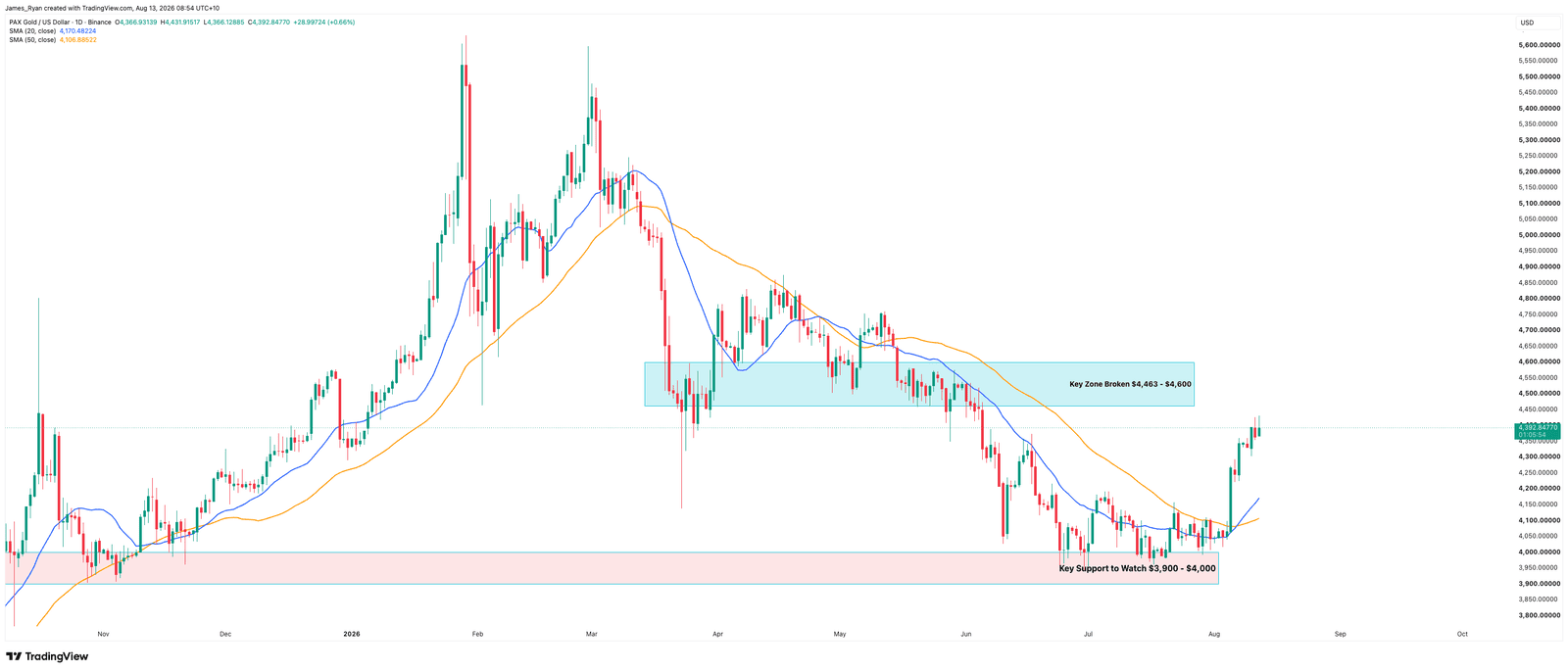
Stormrake Spotlight: Pax Gold (PAXG) ($4,392)
Stormrake Spotlight: Pax Gold (PAXG) ($4,392)