To receive the Morning Note in your inbox, subscribe here: https://stormrake.substack.com/
Yesterday we covered the impact of the war from the perspective of Bitcoin and PAXG, but the effects of the conflict extend far beyond traditional risk on and risk off assets.
The dominant macro talking point right now is oil. Earlier this year the US intervened in Venezuela. Whether that was driven by regime change ambitions or access to mineral and energy resources is open to interpretation. What is clear is that both Venezuela and Iran are significant oil producers. Venezuela has historically ranked within the top 20 oil producing nations, while Iran sits comfortably within the top 10. In a year where energy security and inflation sit at the centre of political and economic debate, that is not insignificant.
Recent data suggests that China imports between 80% and 90% of Iran’s oil exports. That concentration matters. It reinforces the geopolitical alignment around energy flows and highlights how fragmented global supply chains have become. Earlier this year we discussed the political importance of cheaper oil in the US. Inflation remains one of the top concerns for voters ahead of the mid term elections, and gasoline prices are one of the most visible indicators of cost of living pressures.
At the time, many analysts argued that the Venezuelan intervention was partly aimed at unlocking cheaper, extractable oil supply to ease domestic fuel prices. Lower gasoline prices would feed directly into softer headline inflation prints and potentially shift voter sentiment. However, recent polling probabilities show Democrats’ chances of taking the House rising from 77% to 81%, dampening the argument that energy intervention alone can materially shift the political narrative.
Now attention has shifted to Iran. Some market participants speculate that increased US pressure in the region could again be framed around influencing energy markets. However, the immediate market reaction tells a different story.
Oil has spiked sharply. US crude settled up 6.28%, at $71.23 a barrel, while Brent closed at $77.74, up 6.68%. The Strait of Hormuz is now central to the discussion. Iran effectively controls this passage, and roughly 20% to 30% of global oil supply moves through it. Any credible threat of disruption feeds directly into risk premia across energy markets.
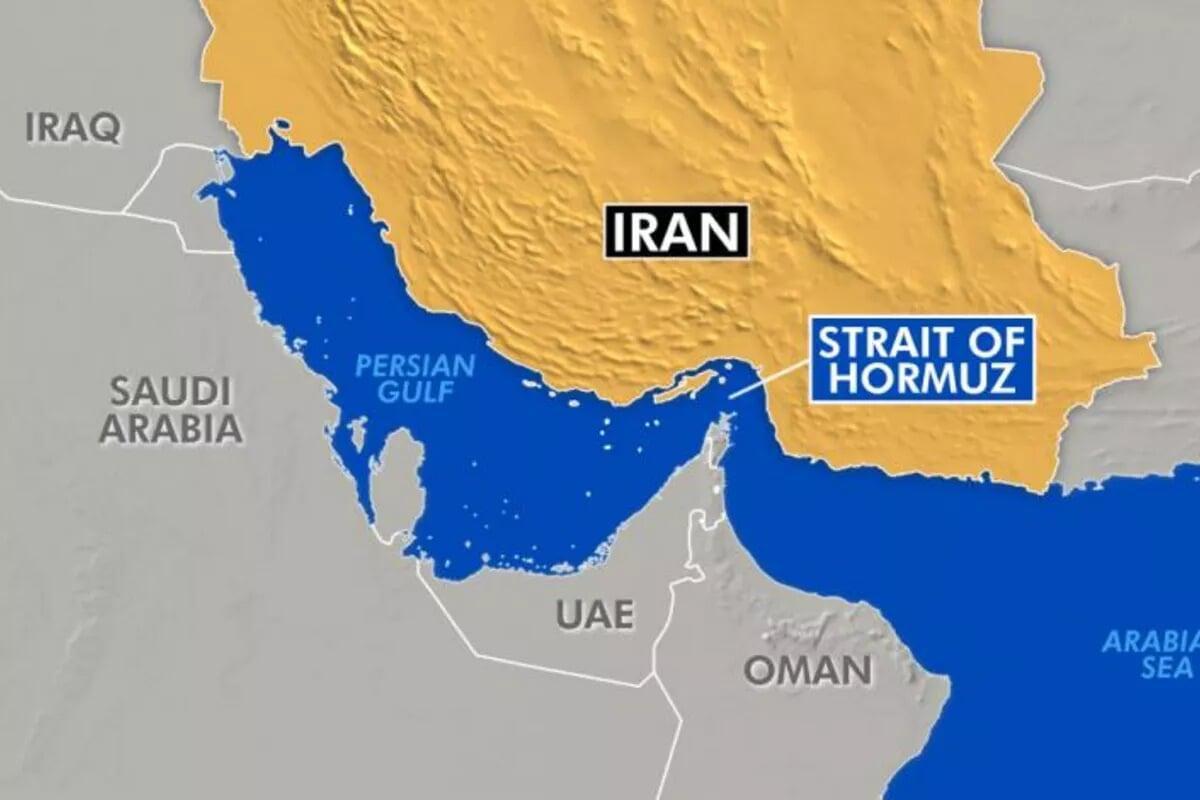
There have already been threats to close the Strait. Even without physical disruption, markets are pricing in the possibility. That is visible not just in futures curves, but at local petrol stations. The inflation implications are critical. Energy feeds directly into CPI through gasoline, heating and transportation costs, but it also has second order effects across logistics, manufacturing and food production. Sustained oil strength could stall or even reverse recent disinflation trends in the US.
If crude holds above the $70 to $80 range and pushes higher, the Federal Reserve faces a more complicated path. Sticky energy inflation would reduce confidence in sustained price stability and could diminish expectations for rate cuts. The market has been eager to price in easing, but higher oil introduces upside risk to inflation just as policy makers were beginning to gain breathing room.
This is where the oil narrative becomes more important than the headlines alone. It is not simply about geopolitics. It is about inflation expectations, bond yields, rate cut probabilities and ultimately liquidity conditions. And liquidity remains the primary driver of risk assets, including crypto.
If inflation does begin to reaccelerate on the back of higher energy prices, we could see a renewed bid in gold. Historically, periods of geopolitical escalation combined with rising inflation expectations have supported precious metals as investors shift into defensive positioning. In crypto markets, that could translate into renewed demand for PAXG as capital rotates away from risk on assets. In that scenario, risk on assets such as Bitcoin and altcoins may face short term headwinds.
Interestingly, as oil volatility increases, we are also seeing the tokenisation trend accelerate. Aster decentralised exchange has launched oil futures and leveraged trading products, signalling growing demand for on chain exposure to traditional commodities. This reflects a broader structural shift. Investors want 24 hour access, composability and capital efficiency, even for legacy assets like crude.
In short, oil is no longer just a background macro variable. It is the transmission mechanism between geopolitics and inflation. And inflation remains the key variable that determines monetary policy, liquidity and risk appetite across both traditional and digital asset markets.
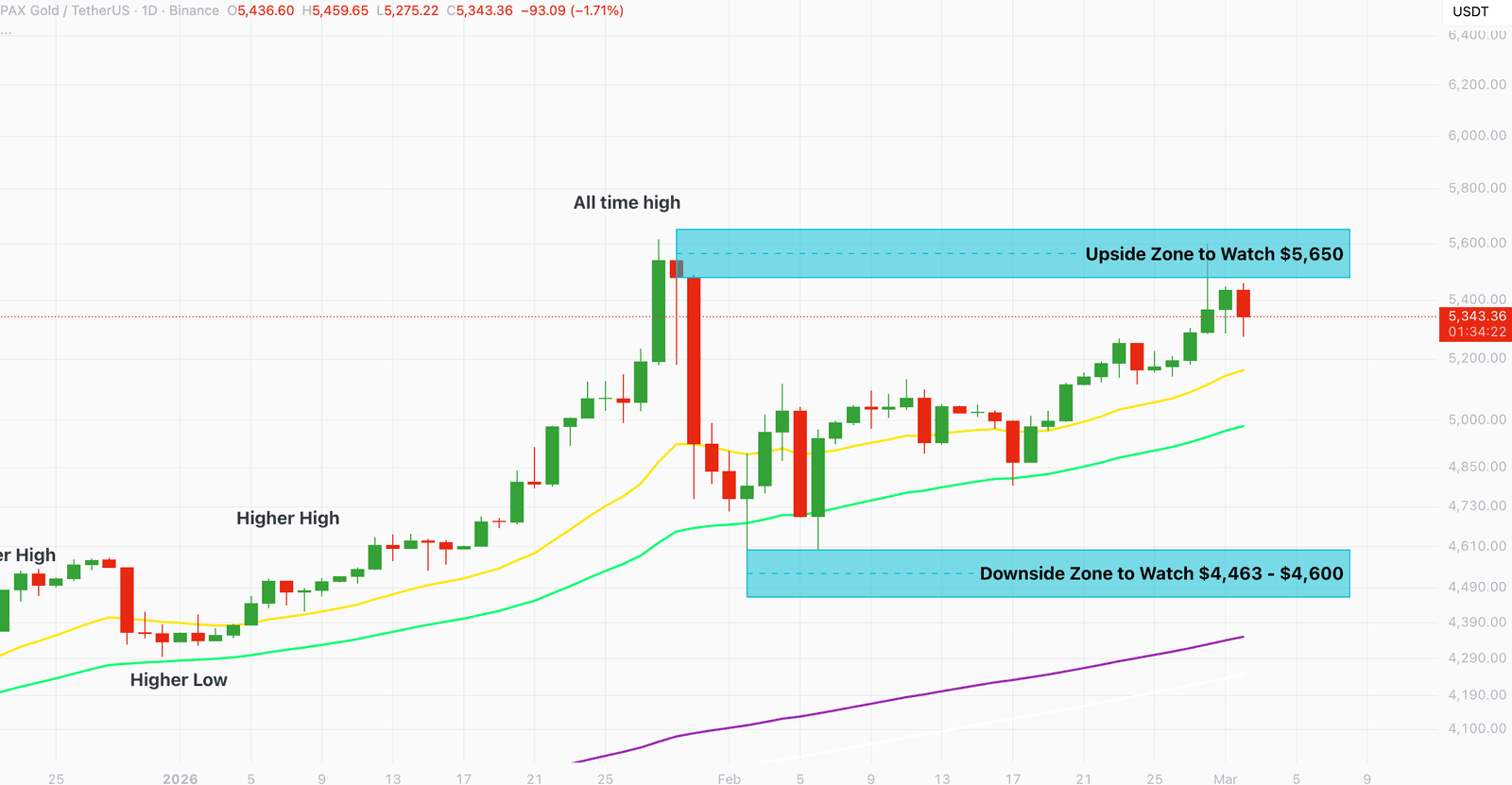
Stormrake Spotlight: Pax Gold (PAXG) ($5,343)
Stormrake Spotlight: Pax Gold (PAXG) ($5,343)