To receive the Morning Note in your inbox, subscribe here: https://stormrake.substack.com/
The reoccurring theme for the Morning Note this week has been the stability in Bitcoin’s fundamentals against a backdrop of ever changing macro and financial conditions. Despite Bitcoin pulling back slightly over the last few days, it remains green since the escalation of conflict in the Middle East. The same cannot be said for traditional risk on markets or even typical safe haven assets, both of which have struggled to find consistent footing.
This relative strength from Bitcoin is not random or purely technical. It is rooted in its value proposition, which becomes increasingly clear during periods of stress.
The war has once again put a spotlight on the structural limitations of traditional finance. Whether it is equity markets being closed during critical moments or the logistical challenges tied to physical assets like gold, these frictions become more apparent when capital needs to move quickly. These are not new issues, but in times of crisis they are amplified.
We are now seeing this play out in real time. With wealth attempting to exit Dubai amid rising tensions, the knock on effects across local markets have been significant. Dubai real estate has dropped nearly 30%, having been down close to 40% just days ago. At the same time, gold dealers are reportedly offering below spot value, highlighting liquidity constraints even in traditionally reliable stores of value.
Against this backdrop, Bitcoin’s relative strength stands out. There is growing speculation that part of this resilience is driven by capital rotation out of affected regions via Bitcoin. The rationale is straightforward. Bitcoin is borderless, it allows for rapid settlement, it operates 24/7, and transactions clear at market price without reliance on intermediaries.
These are not abstract benefits. In moments where time, access, and certainty matter, they become critical.
If this flow is indeed taking place, it reinforces an important distinction. Participants are not engaging with Bitcoin because of its short term price movements. They are engaging with it because of what it enables. The utility becomes the driver, not the valuation.
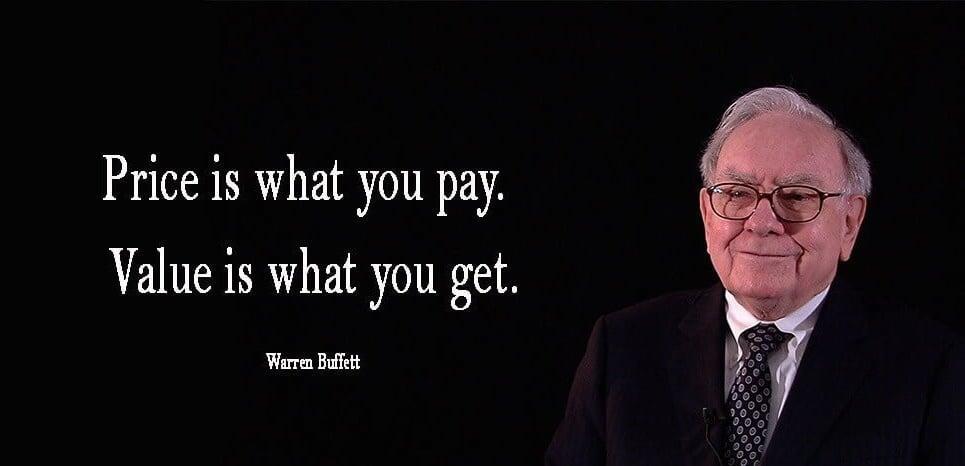
This ties directly into the idea that price and value are not the same. As Warren Buffett famously said, price is what you pay, value is what you get. In Bitcoin’s case, the volatility often distracts from this distinction, but it does not invalidate it.
Bitcoin’s fundamentals do not change depending on where it is trading. The network continues to function as designed regardless of whether BTC is at $50K or $80K. Its scarcity remains fixed. Its settlement layer remains active. Its accessibility remains global.
What changes is perception. And in environments where traditional systems begin to show cracks, that perception tends to shift quickly.
If anything, periods like this act as real world validation. They highlight that Bitcoin is not just a speculative asset moving with liquidity cycles, but a system with real world utility when it is needed most.
The price you pay for one Bitcoin does not change the value of what it is. Smart money has already recognised this distinction, and the broader market is now beginning to catch up.
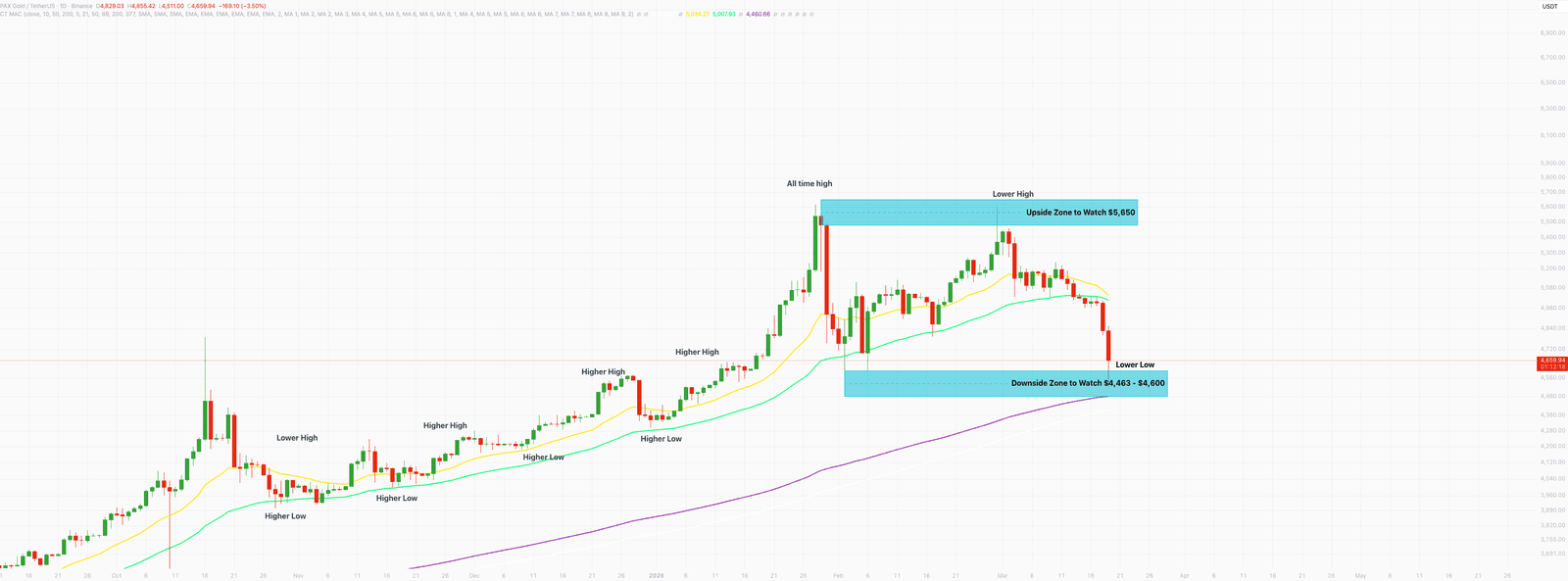
Stormrake Spotlight: Pax Gold (PAXG) ($4,660)
Stormrake Spotlight: Pax Gold (PAXG) ($4,660)