To receive the Morning Note in your inbox, subscribe here: https://stormrake.substack.com/

Tether is preparing to issue USDT natively on the Bitcoin blockchain for the first time in roughly nine years. This rollout runs through the RGB protocol version 0.11.1, which went live on the Bitcoin mainnet in July 2025, with commercial deployment spearheaded by UTEXO, a Bitcoin native execution and settlement layer. This represents a deeply integrated strategic alliance, underscored by Tether leading the 7.5 million dollar seed funding round for UTEXO in March 2026. The commercial launch is expected within weeks of the announcement, with several major exchanges and the native Tether Wallet lined up to support it from day one.
While this infrastructure milestone is underneath daily exchange traded fund flows and Federal Reserve policy countdowns, it represents a profound paradigm shift. This development quietly reshapes where global stablecoin liquidity resides for years to come.
The Evolution of Native Bitcoin Settlement
Looking back at the structural history of digital assets, USDT originally launched on Bitcoin in 2014 via the Omni Layer, long before activity migrated to alternative smart contract platforms to escape network congestion. The RGB protocol has been in meticulous development since 2016 to resolve these core scaling bottlenecks, transforming Bitcoin into an elite settlement network.
The core innovation driving this architecture is client side validation. Client side validation ensures that the vast majority of data remains securely off chain instead of broadcasting full transactional details to the entire global ledger. By anchoring final settlement proofs directly to Bitcoin’s unparalleled security model and utilising the Lightning Network, capital moves with absolute fluid efficiency. This architecture is already functional in live environments. For instance, a Lightning based USDT transfer of 1 million dollars successfully settled on Kraken in a blistering 0.43 seconds in January 2026, providing definitive proof of instant macro scale settlement.
Structural Technical Advantages
For institutional allocators and treasury managers, this protocol optimisation offers two distinct functional advantages:
Zero Asset Fragmentation: Transactions stay entirely within the native Bitcoin and Lightning ecosystem. Allocators are no longer forced to buy and hold volatile secondary utility tokens purely to cover network gas fees.
Sustained Sovereign Privacy: RGB natively inherits Bitcoin’s unspent transaction output architecture. The system generates a brand new, unique cryptographic address for every single capital transfer, completely eliminating address reuse, which remains a primary vector for counterparty privacy failures on alternative networks.
Macro Trends and Tether’s Hard Asset Thesis
This integration arrives precisely as the global stablecoin ecosystem reaches historic scale. Adjusted on-chain stablecoin transaction volume reached an eye watering 1.79 trillion dollars in June 2026, marking a robust 63% increase month over month and a 125% surge year over year. Institutional interest is accelerating rapidly, with legacy banking giants introducing native digital stablecoin services over recent months.
Tether’s technical roadmap clearly demonstrates a profound conviction in absolute scarcity. This RGB integration follows a separate native deployment via the Taproot Assets protocol in March 2026. Crucially, this aligns with Tether’s broader balance sheet allocation strategy, as the firm was identified as the single largest buyer of physical gold in 2025, securing more than 100 tonnes of bullion. The underlying theme is undeniable: the world’s largest liquidity provider is aggressively anchoring its product suite to the only two monetary assets entirely free from central bank discretion and policy debasement - physical gold and native Bitcoin.
How This Benefits Bitcoin’s Future?
Every previous attempt to bring meaningful stablecoin volume back to Bitcoin has faced hurdles, making this a serious infrastructure bet worth watching closely. However, transforming Bitcoin from a passive store of value into the definitive, secure settlement layer for global stablecoin velocity fundamentally alters its long term demand mechanics.
As substantial transactional volume migrates back to Bitcoin native rails, it dramatically expands the network’s real world utility. This direct capture of global payment plumbing reinforces the asset’s structural scarcity by locking up massive liquidity inside Lightning channels. Consequently, this deep institutional utility creates an incredibly resilient valuation floor, perfectly setting the stage to propel further exponential BTC price appreciation as the market transitions into its next major macro expansion cycle.
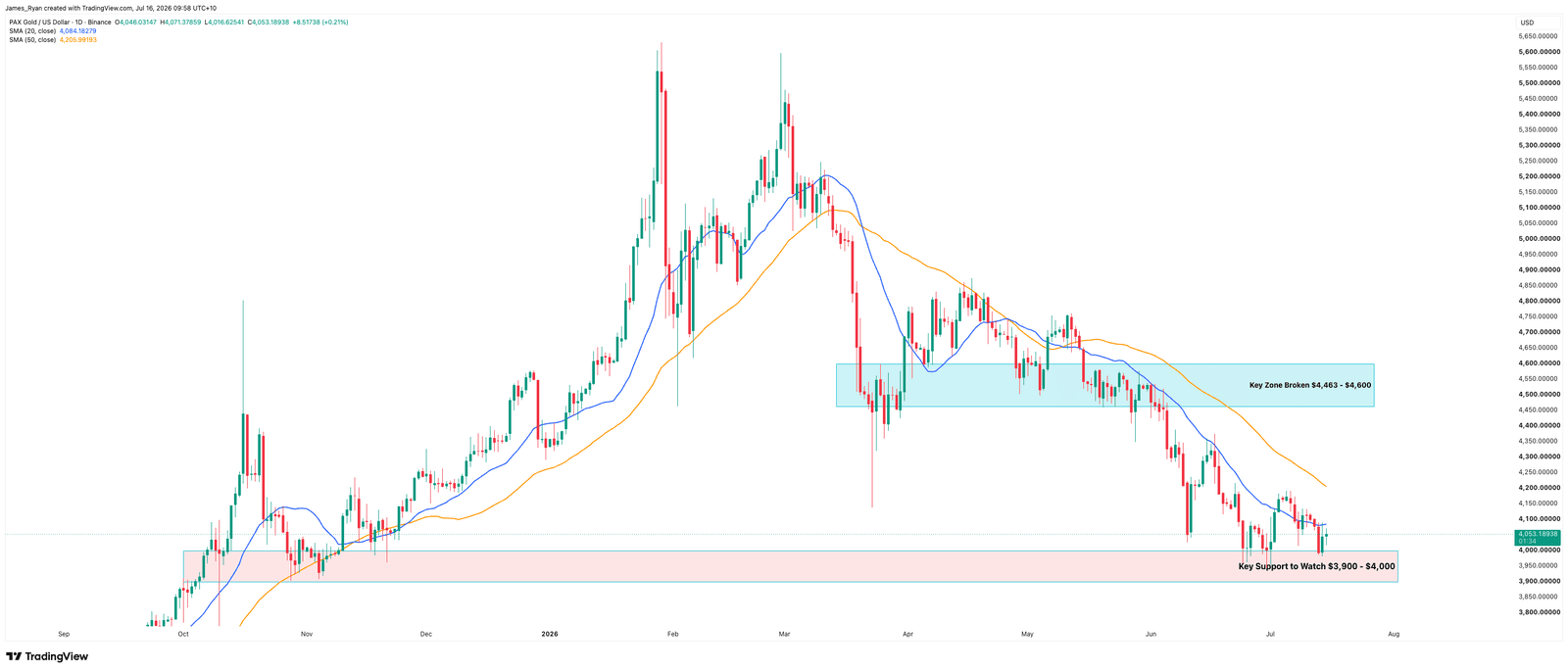
Stormrake Spotlight: Pax Gold (PAXG) ($4,053)
Stormrake Spotlight: Pax Gold (PAXG) ($4,053)