To receive the Morning Note in your inbox, subscribe here: https://stormrake.substack.com/
Oil has long been the primary commodity over which wars are fought, whether through proxy battles or full scale conflicts. Its status as a rich, essential resource makes it a “hot commodity” in every sense: it is extremely centralised, yet required by every nation on the globe.
It is estimated that roughly 80% of proven global oil reserves are controlled by the Organization of the Petroleum Exporting Countries (OPEC). OPEC’s core members include the likes of Saudi Arabia, Iran, Iraq, Kuwait, and Venezuela. The stated goal of this centralised entity is to coordinate petroleum policies and stabilise oil markets; however, in practice (especially when member nations come under threat) this mission often fails.
The past week or so has provided a clear example of this price control faltering. Brent Crude recently rallied over 80% to nearly $120 as a result of intensifying conflict in the Middle East. It has since retraced significantly, at one point dropping nearly 30% in a single day, and is currently trading back below $90. This volatility puts extreme stress on global industry. It isn’t just petrol prices at the pump that are affected, but heating, food, transportation, manufacturing, and agriculture. These costs, in turn, dictate inflation data and heavy handed central bank decisions.
Market volatility remains at extremes following President Trump’s description of the United States’ involvement as a “short term excursion.” His comments regarding potential control over the Strait of Hormuz caused oil to retrace, while traditional equities, Gold, and Bitcoin found room to rally.
The Difference Between Oil and Bitcoin:
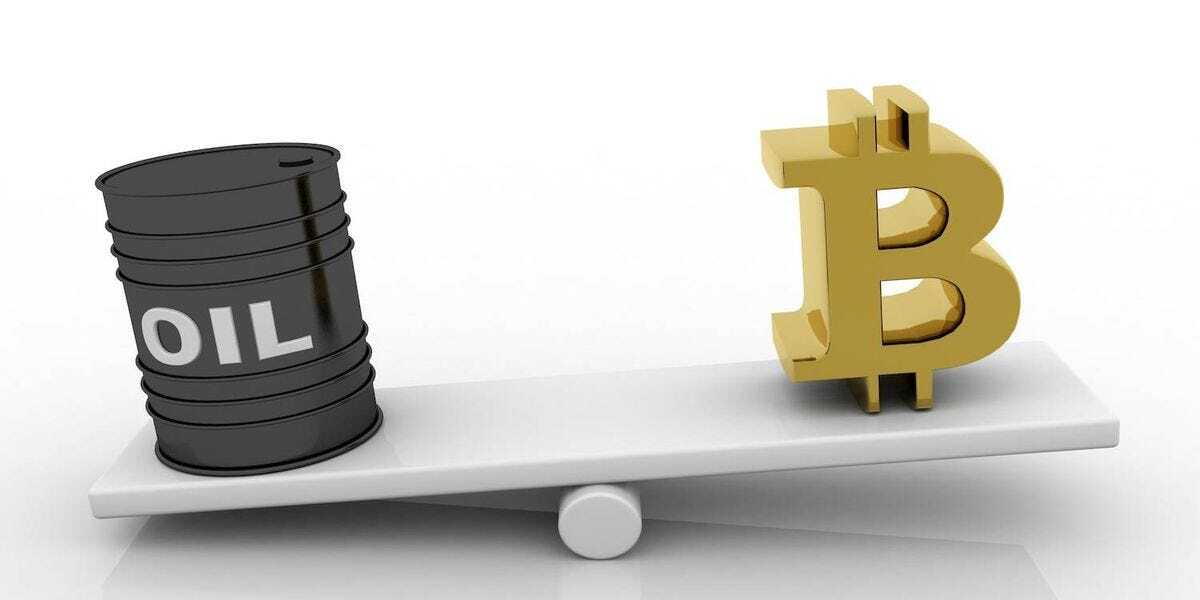
How does this relate to Bitcoin? The current situation highlights the inherent risks of a centralised asset. While Bitcoin and oil serve vastly different purposes, with oil remaining vital for energy consumption and Bitcoin’s utility lying in its role as “digital money,” their structures are polar opposites.
A common criticism of Bitcoin is the perceived “centralised ownership” by large entities, yet oil rarely faces the same scrutiny. Critics often point to Michael Saylor’s Strategy owning roughly 3.5% of the total Bitcoin supply as a concern. However, Strategy remains long term bullish, adding to their balance sheet because they understand the asset’s value.
Contrast this with OPEC, which controls ~80% of the global oil supply and actively attempts to manipulate prices to hit a “sweet spot,” typically between $60 and $80. When prices blow out beyond this range, global systems begin to break and panic ensues. This is precisely what we have witnessed recently.
While we aren’t energy experts, we do understand the broader implications that oil and energy markets have on daily life. Oil is a valuable commodity that serves its purpose but is hampered by centralisation and geopolitics. Bitcoin, while exposed to the volatility that accompanies these global shifts, exists to serve a different, decentralised and monetary purpose.
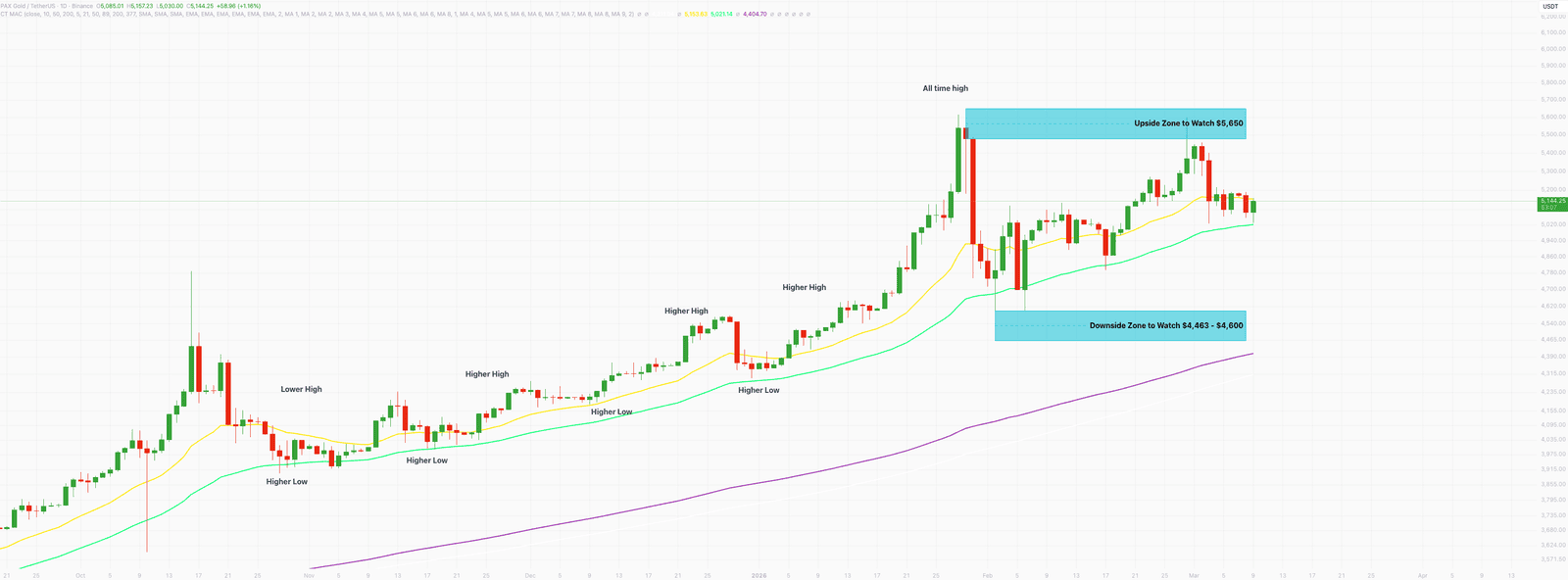
Stormrake Spotlight: Pax Gold (PAXG) ($5,144)
Stormrake Spotlight: Pax Gold (PAXG) ($5,144)