To receive the Morning Note in your inbox, subscribe here: https://stormrake.substack.com/
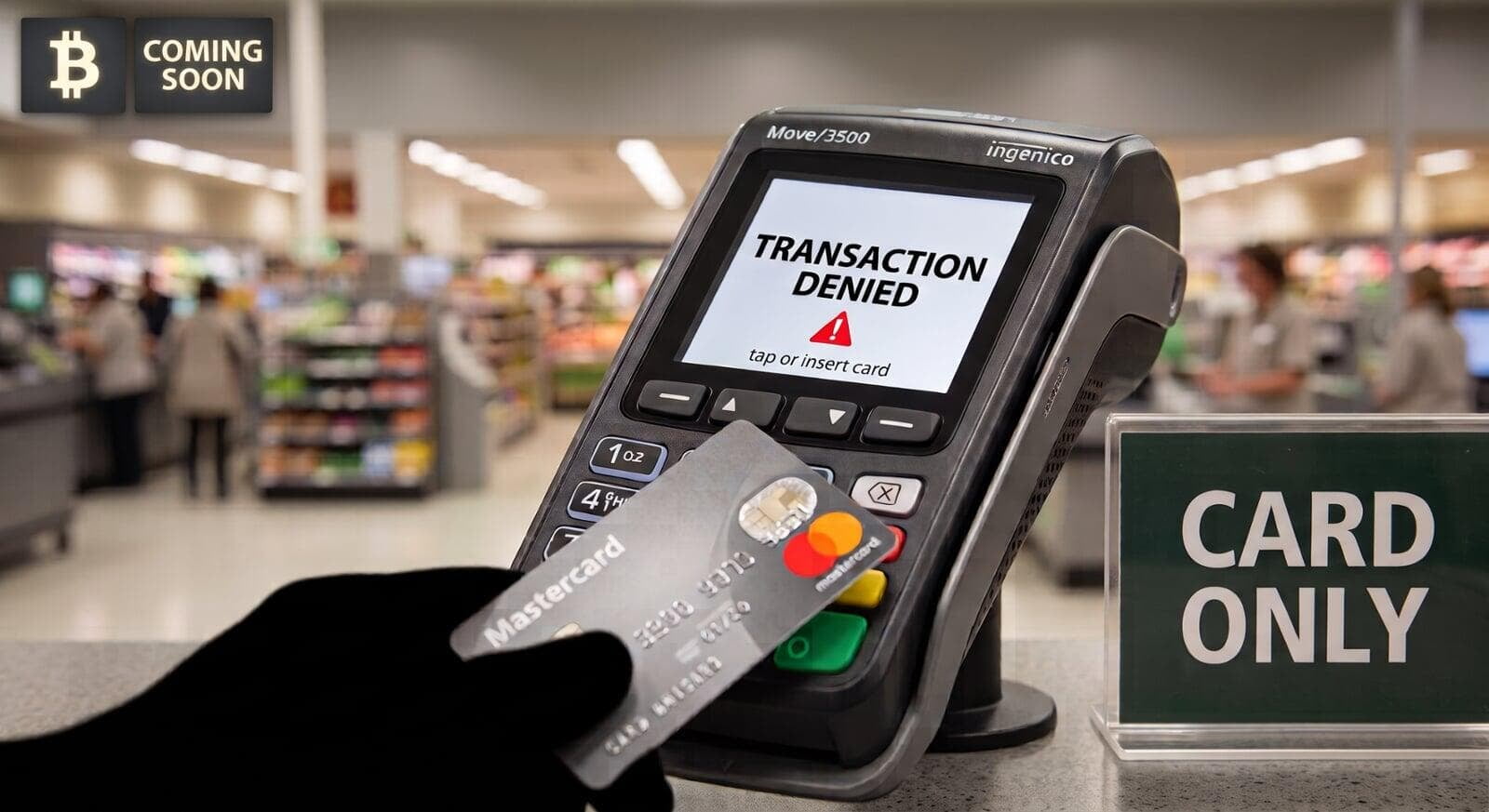
If you tried to tap your card at Woolworths, Coles or anywhere else on Saturday afternoon and it just wouldn’t go through, you weren’t imagining things and you weren’t alone. Mastercard suffered a widespread outage across Australia over the weekend, and more than 2,000 people reported the issue at its peak. Commonwealth Bank and NAB both confirmed their customers were affected, and Commonwealth Bank went as far as telling shoppers to stop using tap and go altogether and switch to inserting their card and selecting “savings” to get through eftpos instead. Mastercard later said the disruption was caused by a scheduled system update and that services had been restored, but for a few hours on a Saturday, a huge number of everyday transactions simply didn’t work.
Think about how that actually played out for the person standing at the checkout. Card declined, second card declined, and then the very human moment of patting down your pockets for cash you probably don’t carry anymore. As we move further into a cashless society, fewer of us keep a backup plan. When the primary rail goes down, there often isn’t a plan B sitting in your wallet.
Free Marketing, Courtesy of Mastercard
Here’s the part worth sitting with. This is effectively free marketing for Bitcoin. Not because Bitcoin is trying to replace your Saturday shopping trip tomorrow, but because the entire reason Bitcoin exists is written into the opening line of Satoshi Nakamoto’s whitepaper: “A purely peer-to-peer version of electronic cash would allow online payments to be sent directly from one party to another without going through a financial institution.” That sentence was written specifically with this kind of failure in mind. A scheduled update at a payments company shouldn’t be able to stop people from spending their own money, and yet on Saturday, it did.
For context, and to keep this factually honest rather than turning it into a slogan, Bitcoin’s network has not had a perfect record either. It has gone down twice in its history, in 2010 and 2013, and both were software bugs that were patched within hours. Since that second incident in 2013, though, the network hasn’t gone down once. That’s close to 14 years of continuous uptime, sitting at somewhere around 99.98% across its entire life. It’s commonly cited, including by people inside the tech industry itself, that this track record now runs ahead of the uptime posted by companies like Amazon, Google and Facebook over comparable periods. So the fairer claim isn’t that Bitcoin has never gone down. It’s that Bitcoin hasn’t needed a company to schedule an update on your behalf, and it has now stayed online longer without interruption than most of the infrastructure we rely on every day, through bull markets, bear markets, exchange collapses and everything in between.
We’re not going to pretend this is a clean win for crypto adoption. Bitcoin still isn’t something you can tap at Woolies, and for the overwhelming majority of merchants around the world, it isn’t a practical alternative to a card in your pocket today. That’s a fair criticism and we’re not going to argue around it.
But moments like Saturday are a lesson worth remembering, not because everyone needs to rush out and change how they pay for groceries, but because it’s a reminder that your ability to spend your own money shouldn’t depend entirely on a third party’s system staying online. It’s a small crack in the reliability of the rails we’ve all agreed to trust without thinking twice. Cracks like this don’t need to happen often to matter. Every outage, every frozen account, every “sorry, our systems are down” moment chips away a little more at the assumption that centralised payment rails are simply infallible. Over time, that frustration is what pushes people to look for alternatives, and a decentralised system built specifically to remove that single point of failure is the obvious place to look.
And here’s where the two threads tie together. The more people who reach that conclusion and act on it, the more demand there is for the asset itself, and that’s a big part of what has driven Bitcoin’s price higher over its history. So the use case and the investment case aren’t separate stories, they’re the same story told from two angles. Owning and controlling your own money is the point. The fact that doing so has also meant your wealth has grown over time is what makes the proposition genuinely hard to ignore.
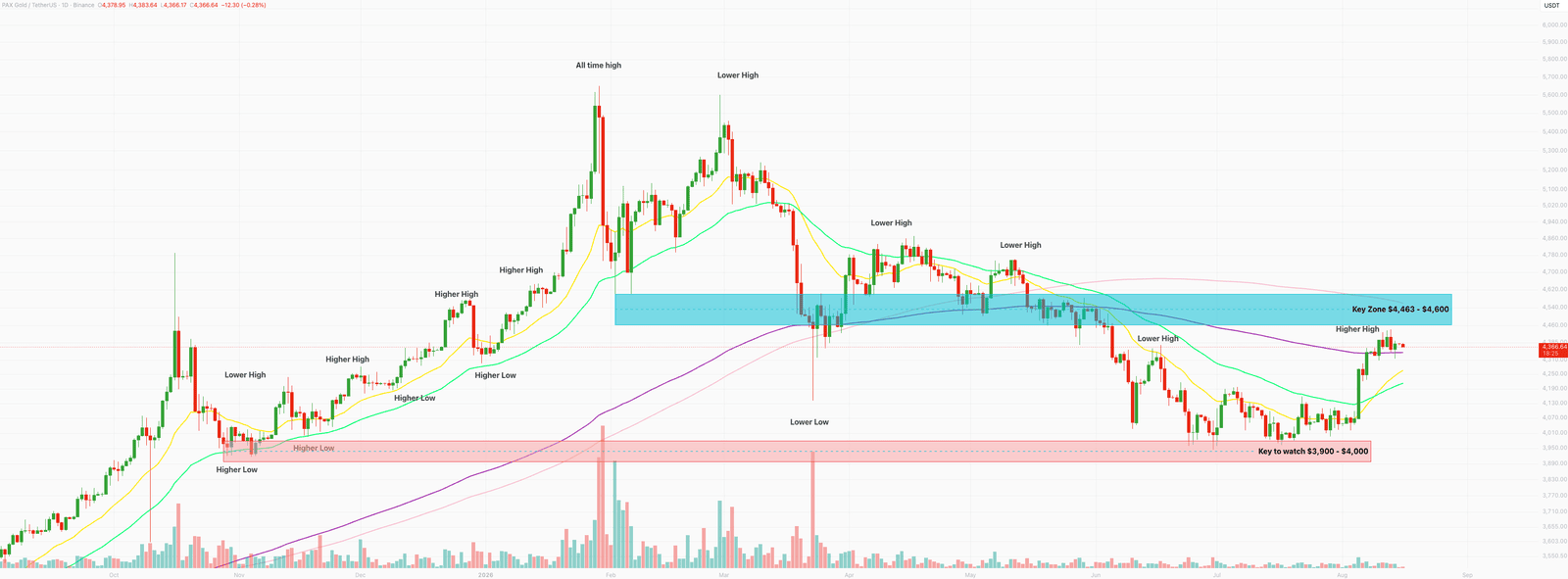
Stormrake Spotlight: Pax Gold (PAXG) ($4,366)
Stormrake Spotlight: Pax Gold (PAXG) ($4,366)